In my clinical practice of treating skin conditions, one of the most powerful lessons I have learnt is this: the most important skincare routine does not happen in the bathroom. It happens in the kitchen.
Patients come to me spending thousands on creams, serums, and treatments — but eating processed food, skipping water, and wondering why their skin still looks dull and tired. And the answer is almost always the same:
your skin is a mirror of what you eat.
The right food for glowing skin works from the inside out — delivering the vitamins, minerals, antioxidants, and hydration your skin cells need to stay healthy, repair themselves, and produce that natural radiance no cream can fully replicate.
In this guide, I am going to share exactly which foods give you glowing skin, the nutrients your skin needs most, a simple 7-day diet plan for radiant skin, and the foods that are silently damaging your complexion. This is the advice I give my patients every single day.
What Does “Food for Glowing Skin” Actually Mean?
Glowing skin is not just about how your skin looks. It is a sign of how healthy your skin actually is from the inside.
When your skin is well-nourished — when it is getting the right vitamins, antioxidants, healthy fats, and water — it functions at its best. Cells regenerate faster. Collagen production stays strong. Inflammation stays low. And the result is skin that looks clear, even, plump, and radiant.
Food for glowing skin means choosing ingredients that directly support these processes. It is not a fad diet or a restrictive meal plan. It is simply eating more of what your skin loves — and less of what damages it.
The best part? Most of the best foods for skin health are things you already have access to — fruits, vegetables, nuts, seeds, and water. No expensive supplements required.
Why Does What You Eat Affect Your Skin?
This is the question I love answering, because the science behind it is fascinating and very clear.
Your skin is your body’s largest organ. Like every other organ, it needs fuel to function properly. That fuel comes from your food. Here is how the connection works:
- Vitamin C — Essential for collagen production. Without it, skin loses firmness and develops fine lines. Found in citrus fruits, papaya, tomatoes.
- Vitamin E — Protects skin cells from oxidative damage. Found in nuts, seeds, avocado.
- Omega-3 Fatty Acids — Reduce skin inflammation, keep the skin barrier strong and moisturised. Found in walnuts, flaxseeds, fatty fish.
- Zinc — Controls oil production and reduces acne. Found in pumpkin seeds, legumes, whole grains.
- Antioxidants — Fight free radicals that cause premature aging and dull skin. Found in berries, green tea, dark leafy vegetables.
- Water — Keeps skin cells plump, hydrated, and functioning properly. No food or cream can replace adequate daily water intake.
When you eat a diet rich in these nutrients, your skin has everything it needs to repair itself, stay hydrated, fight inflammation, and maintain that healthy glow. When your diet is poor, the skin suffers first — and often most visibly.
Signs That Your Diet May Be Affecting Your Skin
In my clinic, I can often get a sense of a patient’s diet just from the condition of their skin. Here are the common signs that what you are eating is working against your complexion:
“`html| Skin Symptom | What It Often Signals Dietarily |
|---|---|
| Dull, tired-looking skin | Low antioxidant and vitamin C intake, dehydration |
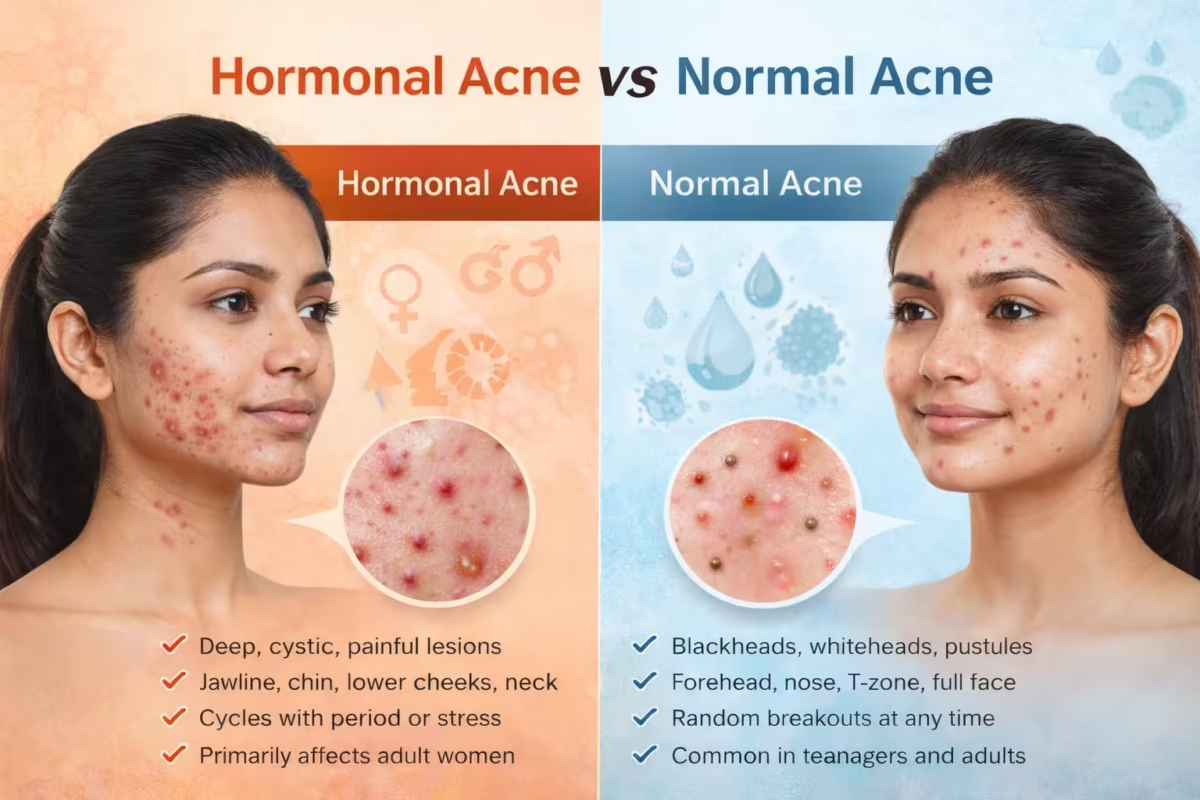
| Frequent acne breakouts | High sugar, dairy, or processed food consumption |
| Dry, flaky skin | Low omega-3 fatty acids, insufficient water intake |
| Premature fine lines | Low collagen-supporting nutrients, high sugar diet |
| Puffy face or dark circles | High sodium intake, alcohol, poor sleep and hydration |
| Uneven skin tone / pigmentation | Low vitamin C, antioxidant deficiency |
| Oily, congested skin | High glycaemic diet, excess dairy consumption |
If you recognise any of these, the good news is that diet-related skin problems are among the most reversible. With the right changes, most patients start seeing a visible improvement in their skin within 4 to 6 weeks.
Key Nutrients Your Skin Needs for a Natural Glow
Before we get into the specific foods, let me walk you through the nutrients that matter most for skin health. Understanding these helps you make smarter food choices every day.
| Nutrient | Skin Benefit | Best Food Sources |
|---|---|---|
| Vitamin C | Boosts collagen, brightens skin, fades dark spots | Papaya, oranges, tomatoes, amla, lemon |
| Vitamin E | Protects against sun damage, deeply moisturises | Almonds, sunflower seeds, avocado, olive oil |
| Vitamin A | Speeds cell turnover, prevents clogged pores | Carrots, sweet potato, spinach, eggs |
| Omega-3 Fatty Acids | Reduces inflammation, strengthens skin barrier | Walnuts, flaxseeds, chia seeds, fatty fish |
| Zinc | Controls oil, heals acne, repairs skin | Pumpkin seeds, chickpeas, whole grains |
| Collagen Boosters | Maintains skin firmness and elasticity | Bone broth, citrus fruits, berries, leafy greens |
| Antioxidants | Fights free radicals and premature aging | Berries, green tea, turmeric, dark chocolate |
| Water / Hydrating Foods | Plumps skin cells, flushes toxins | Cucumber, watermelon, coconut water, plain water |
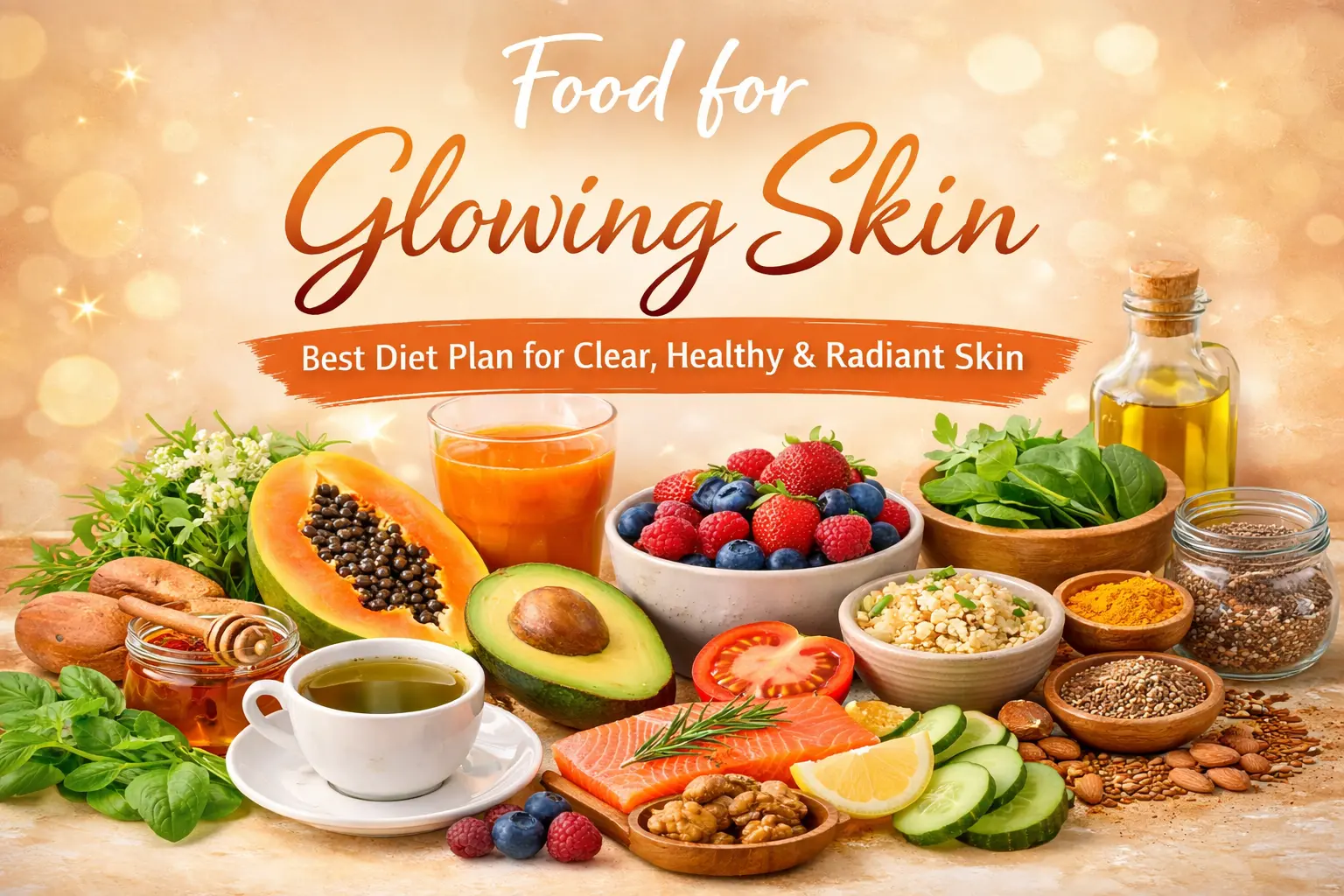
Top 10 Best Foods for Glowing Skin
These are the foods I recommend most often to my patients for natural skin radiance. Each one is backed by science and easy to include in your daily diet.
“`html🍌 Banana
Key Nutrient: Vitamin B6, Potassium, Vitamin C
Skin Benefit: Helps maintain skin moisture, reduces inflammation, and supports overall skin health. The potassium content hydrates skin cells from within.
🍓 Papaya
Key Nutrient: Vitamin C, Papain Enzyme, Beta-Carotene
Skin Benefit: One of the best fruits for glowing skin. Papain enzyme gently removes dead skin cells, Vitamin C boosts collagen, and beta-carotene gives skin a natural glow.
🍅 Tomato
Key Nutrient: Lycopene, Vitamin C, Vitamin A
Skin Benefit: Lycopene is one of the most powerful antioxidants for skin — it protects against UV damage and reduces redness. Regular tomato consumption visibly improves skin texture.
🥕 Carrot
Key Nutrient: Beta-Carotene, Vitamin A, Vitamin C
Skin Benefit: Beta-carotene converts to Vitamin A in the body — the nutrient responsible for skin cell regeneration and preventing clogged pores. Carrots give skin a subtle natural glow over time.
🍃 Spinach
Key Nutrient: Iron, Vitamin K, Vitamin C, Folate
Skin Benefit: Iron deficiency is one of the most common causes of dull, pale skin. Spinach supports healthy blood circulation, giving skin a fresh colour.
🥑 Avocado
Key Nutrient: Vitamin E, Healthy Fats, Biotin
Skin Benefit: Rich in monounsaturated fats that keep skin soft, supple, and moisturised from within. Vitamin E protects against oxidative damage.
🌳 Walnuts
Key Nutrient: Omega-3 Fatty Acids, Vitamin E, Zinc
Skin Benefit: Reduce inflammation, prevent dryness, and keep the skin barrier strong. Zinc helps control acne.
🍵 Green Tea
Key Nutrient: EGCG Antioxidant, Polyphenols, Catechins
Skin Benefit: Reduces inflammation, protects against UV damage, improves elasticity, and reduces redness.
🧂 Turmeric
Key Nutrient: Curcumin, Anti-inflammatory Compounds
Skin Benefit: Reduces inflammation, fights acne bacteria, brightens skin tone, and fades dark spots.
🥑 Cucumber
Key Nutrient: Water Content (96%), Silica, Vitamin K
Skin Benefit: Highly hydrating food that supports collagen structure and reduces dark circles.
7-Day Diet Plan for Glowing Skin
This is the kind of diet plan I guide my patients towards when they want to see visible changes in their skin within a few weeks. It is practical, affordable, and uses everyday Indian ingredients.
The goal is not perfection — it is consistency. Eating well 80% of the time is enough to make a real difference.
“`html7-Day Diet Plan for Glowing Skin
Day 1 — Monday: Hydration Focus
- Early morning: 2 glasses of warm water + soaked walnuts (4-5)
- Breakfast: Vegetable poha with tomatoes + 1 glass carrot juice
- Mid-morning: 1 cup green tea
- Lunch: Dal + spinach sabzi + brown rice + cucumber raita
- Evening snack: 1 bowl papaya cubes
- Dinner: Vegetable khichdi with turmeric + 1 glass warm haldi doodh
Day 2 — Tuesday: Vitamin C Boost
- Early morning: Warm lemon water + 4 almonds
- Breakfast: Moong dal chilla with tomato chutney + 1 orange
- Mid-morning: 1 cup green tea
- Lunch: Rajma + carrot salad + chapati + cucumber slices
- Evening snack: Amla juice or 1 fresh amla
- Dinner: Palak dal + chapati + 1 glass warm milk
Day 3 — Wednesday: Antioxidant Day
- Early morning: Warm water with turmeric + soaked walnuts
- Breakfast: Oats with banana + 1 cup green tea
- Lunch: Mixed vegetable curry with spinach + brown rice
- Evening snack: A handful of mixed nuts and seeds
- Dinner: Tomato soup + 2 chapati + small bowl curd
Day 4 — Thursday: Omega-3 Focus
- Early morning: Chia seeds soaked in water overnight
- Breakfast: Upma with vegetables + flaxseed powder sprinkled on top
- Lunch: Fish curry (or tofu for vegetarians) + brown rice + salad
- Evening snack: Cucumber sticks with hummus
- Dinner: Moong dal soup + chapati + haldi doodh at bedtime
Day 5 — Friday: Glow Foods Day
- Early morning: Papaya slices + warm water
- Breakfast: Dalia with vegetables + carrot juice
- Lunch: Chole + tomato-onion salad + chapati
- Evening snack: 1 cup green tea + 4-5 walnuts
- Dinner: Palak paneer + chapati + cucumber raita
Day 6 — Saturday: Collagen Support
- Early morning: Amla juice + warm water
- Breakfast: Egg omelette with spinach and tomatoes (or paneer scramble)
- Lunch: Mixed dal + sweet potato + chapati + salad
- Evening snack: Watermelon slices or coconut water
- Dinner: Vegetable soup with turmeric + 2 chapati
Day 7 — Sunday: Reset & Repair
- Early morning: Warm water + soaked overnight walnuts + chia seeds
- Breakfast: Banana smoothie with flaxseeds + green tea
- Lunch: Light khichdi with ghee + papaya after meal
- Evening snack: Green tea + handful of mixed seeds
- Dinner: Haldi doodh + light sabzi + chapati
Foods to Avoid for Glowing Skin
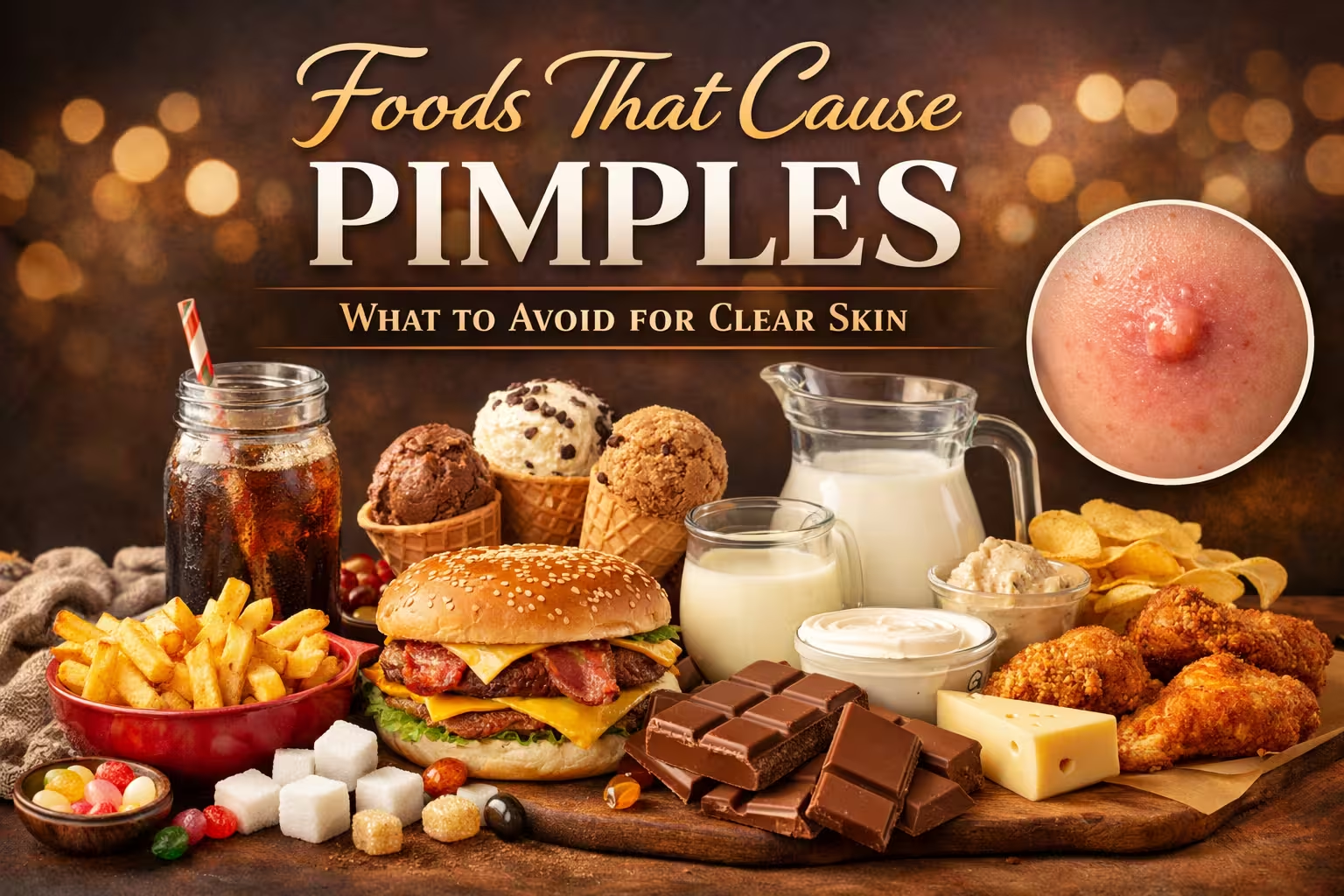
Eating the right foods is only half the equation. Equally important is reducing the foods that work against your skin. These are the dietary culprits I see most often in patients dealing with dull, acne-prone, or aging skin:
“`html| Food to Avoid / Reduce | Why It Harms Your Skin |
|---|---|
| Refined sugar & sweets | Triggers glycation — a process that breaks down collagen and causes premature aging and dull skin |
| Processed & packaged foods | High in sodium, preservatives, and unhealthy fats — causes puffiness, dull skin, and clogged pores |
| Excess dairy (for acne-prone skin) | Dairy contains hormones that can stimulate oil glands and worsen acne in susceptible people |
| Fried and oily food | Increases inflammation in the body, which shows up as acne, redness, and skin congestion |
| Alcohol | Severely dehydrates skin cells, depletes Vitamin A and C, and causes premature aging |
| Caffeine in excess | More than 2 to 3 cups a day dehydrates the skin and can disrupt sleep — both damage skin health |
| High-glycaemic foods (white rice, maida, white bread) | Spike blood sugar rapidly, increasing inflammation and acne breakouts |
You can also refer our blogpost: 10 Foods That Cause Pimples and Worsen Acne
Additional Tips to Maximise Your Skin Glow From the Inside
Diet is the foundation, but these habits work alongside your food choices to amplify the results:
- Drink at least 8 to 10 glasses of water daily — this is the single most impactful free skin habit
- Sleep 7 to 8 hours every night — your skin repairs itself during deep sleep, and no food can compensate for chronic sleep deprivation
- Exercise at least 3 to 4 times a week — sweating improves circulation, delivers nutrients to skin cells, and gives a natural post-workout glow
- Manage stress — cortisol (the stress hormone) breaks down collagen, triggers breakouts, and accelerates skin aging
- Start your morning with warm water — it flushes toxins and kickstarts your metabolism before food
- Eat mindfully and slowly — digestion begins in the mouth, and good digestion directly affects skin health
Common Diet Mistakes That Prevent Glowing Skin
Even patients who are trying to eat well for their skin often make these mistakes:
- Drinking fruit juice instead of eating whole fruit — Juicing removes the fibre and concentrates sugar. Eat your fruits whole for better skin and blood sugar benefits.
- Skipping healthy fats — Many people avoid all fats in the name of health. But omega-3 and monounsaturated fats are essential for skin moisture and barrier health. Do not skip walnuts, avocado, and seeds.
- Being inconsistent — Eating papaya once a week and expecting glowing skin is like exercising once a month and expecting fitness. Consistency is everything.
- Not drinking enough water — You can eat every food on this list perfectly and still have dull skin if you are chronically dehydrated. Water is non-negotiable.
- Expecting overnight results — Diet changes take 4 to 6 weeks to show visible results in the skin. Your skin cells take approximately 28 days to fully renew. Be patient.
- Focusing only on diet and ignoring skincare basics — Diet supports your skin from the inside. Cleanser, moisturiser, and sunscreen protect it from the outside. Both are needed.
Frequently Asked Questions
These are the questions my patients and readers most commonly ask about food for glowing skin:
Final Words From Dr. Sufia Shaikh
After 18 years of treating skin conditions and guiding patients on skin health, the one message I come back to again and again is this:
No cream can do what food does.
The best diet plan for glowing skin is not complicated. It is not expensive. It does not require imported superfoods or expensive supplements. It requires consistency with the basics: fruits, vegetables, nuts, seeds, water, and less sugar and processed food.
Start with the 10 foods I have shared. Follow the 7-day glowing skin diet plan. Reduce the foods that work against your complexion. Drink your water. Sleep well.
Give your skin 6 weeks of eating well and watch what happens. Your skin has been waiting for this kind of nourishment. And it will show you its gratitude — in the form of clarity, radiance, and that natural glow that no filter or product can replicate.
Pair your healthy diet with a simple skincare routine — a gentle cleanser, a good moisturiser, and daily sunscreen — and you have the complete inside-out approach to skin health that I recommend to every one of my patients.