One of the most common frustrations I hear in my clinic is this:
“Doctor, I have been treating my acne for months, trying everything — but nothing works. Why?”
And very often, the answer lies in a question that was never asked:
Is it hormonal acne or normal acne?
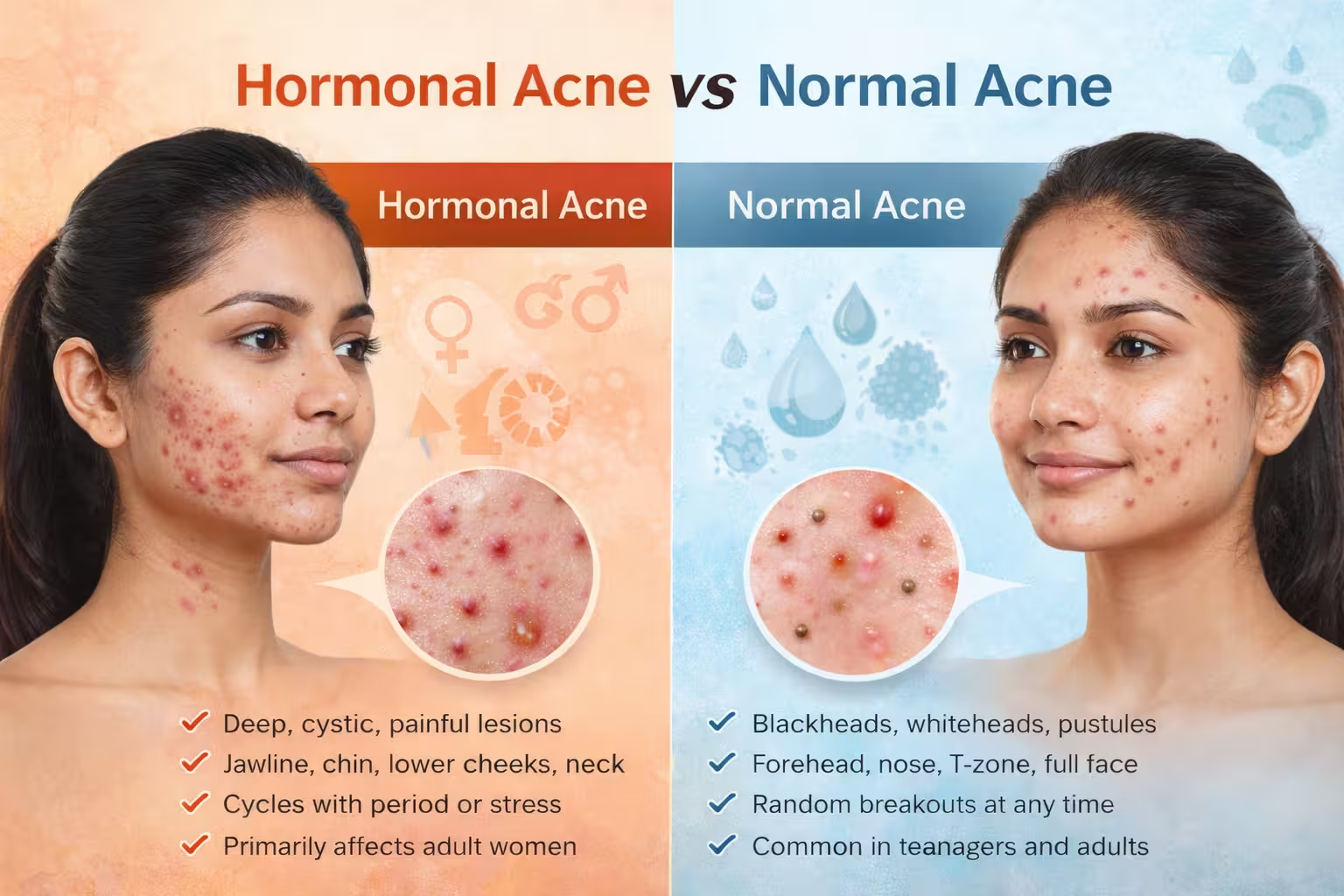
This distinction is not just medical detail — it is the difference between treatment that works and treatment that keeps failing. Hormonal acne vs normal acne are two very different conditions, with different causes, different locations on the face, different patterns, and most importantly, different treatments.
In my carrier — from teenagers to women in their 40s — I have seen how much confusion exists around this topic. People apply the wrong treatments, use the wrong products, and feel helpless when their skin does not respond.
This article will give you the clear, simple explanation you need to understand which type of acne you are dealing with — and what to do about it.
What Is Hormonal Acne?
Hormonal acne is acne that is directly caused or triggered by hormonal fluctuations in the body — particularly changes in the levels of androgens (male hormones like testosterone), oestrogen, and progesterone.
When androgen levels rise — which can happen during puberty, menstruation, pregnancy, perimenopause, or due to conditions like PCOS — they stimulate the sebaceous (oil) glands in the skin to produce more sebum. Excess sebum clogs pores, creates an environment where acne bacteria thrive, and leads to inflammation.
What makes hormonal acne different from other types is its predictability and its pattern. It tends to:
- Appear at the same time every month — often in the week before or during menstruation
- Show up in specific locations — primarily the lower face, jawline, chin, and neck
- Present as deep, painful, cystic lesions rather than surface-level pimples
- Be more stubborn and resistant to topical treatments alone
- Affect adult women significantly more than any other group
Hormonal acne is not just a teenage problem. In fact, I see far more adult hormonal acne in my clinic than teenage hormonal acne — particularly in women between the ages of 25 and 45.
“`htmlWhat Is Hormonal Acne?
Hormonal acne is acne that is directly caused or triggered by hormonal fluctuations in the body — particularly changes in the levels of androgens (male hormones like testosterone), oestrogen, and progesterone.
When androgen levels rise — which can happen during puberty, menstruation, pregnancy, perimenopause, or due to conditions like PCOS — they stimulate the sebaceous (oil) glands in the skin to produce more sebum. Excess sebum clogs pores, creates an environment where acne bacteria thrive, and leads to inflammation.
What makes hormonal acne different from other types is its predictability and its pattern. It tends to:
- Appear at the same time every month — often in the week before or during menstruation
- Show up in specific locations — primarily the lower face, jawline, chin, and neck
- Present as deep, painful, cystic lesions rather than surface-level pimples
- Be more stubborn and resistant to topical treatments alone
- Affect adult women significantly more than any other group
Hormonal acne is not just a teenage problem. In fact, I see far more adult hormonal acne in my clinic than teenage hormonal acne — particularly in women between the ages of 25 and 45.
What Is Normal Acne?
“Normal acne” — also called common acne or acne vulgaris — is the most prevalent form of acne and typically occurs when pores become clogged by a combination of excess oil, dead skin cells, and acne-causing bacteria (Cutibacterium acnes).
Unlike hormonal acne, normal acne is not driven primarily by internal hormonal changes. It is more directly related to external factors, skin hygiene, diet, stress, and skin type. It can affect anyone at any age, though it is most common during the teenage years when oil production naturally increases.
Normal acne tends to:
- Appear more randomly without a consistent monthly pattern
- Show up across the face — forehead, nose, cheeks, and T-zone
- Present as blackheads, whiteheads, surface pimples, and pustules
- Respond well to topical treatments and good skincare habits
- Improve significantly with dietary changes and proper cleansing routines
Most people experience some form of normal acne at some point in their lives — particularly during periods of stress, dietary changes, or when starting new skincare products. You can find out Types of Acne Explained
“`htmlNormal acne responds well to a consistent skincare routine — a gentle cleanser, non-comedogenic moisturiser, and targeted topical treatments. If your acne is responding to these measures, it is most likely normal acne. If it keeps coming back in the same spots at the same time, look deeper.
Hormonal Acne vs Normal Acne: At a Glance
Before we go into detail, here is a quick side-by-side overview of both types:
| Hormonal Acne | Normal Acne |
|---|---|
|
|
Hormonal Acne vs Normal Acne: Key Differences Explained
1. Where It Appears on Your Face
This is one of the most reliable ways to identify hormonal acne — the location tells you a lot.
| Face Zone | What It Suggests |
|---|---|
| Chin and jawline | Strongly suggests hormonal acne — this is the classic hormonal zone |
| Lower cheeks and neck | Often hormonal — linked to androgen sensitivity in these areas |
| Forehead and nose (T-zone) | Typically normal acne — related to oil production and clogged pores |
| Cheeks (upper) | Can be normal acne — often linked to phone contact, pillowcase bacteria |
| Around the mouth | Can be hormonal — especially in women with PCOS |
| Back and chest | Usually normal acne — sebaceous gland activity, sweat, and occlusion |
In my clinic, when a woman points to her chin and jawline and says her acne comes every month before her period — I know immediately we are dealing with hormonal acne before any test is even run. Location and timing together are the most powerful diagnostic tools.
2. What the Acne Looks Like
The appearance and texture of acne lesions gives important clues about the type:
| Acne Appearance | Type |
|---|---|
| Deep, painful cysts under the skin — no visible head | Hormonal acne |
| Large, inflamed nodules that feel sore to touch | Hormonal acne |
| Blackheads (open comedones) — dark, surface-level spots | Normal acne |
| Whiteheads (closed comedones) — small, white bumps | Normal acne |
| Pustules — pimples with visible white/yellow pus | Normal acne (or mixed) |
| Papules — small, red, raised bumps without a head | Can be either type |
3. The Pattern and Timing
- Hormonal acne — Has a predictable, cyclical pattern. It flares up at the same time each month — typically 7 to 10 days before menstruation when progesterone is high and oestrogen drops. It then reduces after the period ends.
- Normal acne — Has no consistent pattern. It can appear randomly after eating certain foods, when stressed, when trying a new product, or due to poor skincare habits.
4. Who Gets It
| Hormonal Acne | Normal / Regular Acne |
|---|---|
| Most common in adult women aged 20-45 | Most common in teenagers of both sexes |
| Often seen with PCOS, thyroid issues, or hormonal contraceptive changes | Triggered by diet, stress, poor hygiene, wrong products |
| Can persist or worsen after puberty, especially around periods | Often improves naturally after teenage years |
| Stress increases androgens and worsens acne | Improves with good topical skincare routine |
Hormonal Acne vs Normal Acne: Full Comparison Table
| Feature | Hormonal Acne | Normal Acne |
|---|---|---|
| Primary Cause | Hormonal fluctuations | Excess oil, bacteria |
| Main Location | Jawline, chin | T-zone |
| Acne Type | Deep cysts | Blackheads, whiteheads |
| Timing | Cyclical | Random |
| Who Is Affected | Adult women | All ages |
| Pain Level | Painful | Mild |
| Response to Topicals | Limited | Good |
| Common Triggers | Periods, PCOS | Diet, stress |
| Treatment Approach | Hormonal + topical | Topical skincare |
How to Identify Hormonal Acne: Signs to Look For
Based on my 18 years of clinical practice, here are the signs that strongly suggest your acne is hormonal:
- It appears on your chin, jawline, or lower face — These areas have more androgen receptors and are the classic hormonal acne zones.
- It happens like clockwork — If you can predict a breakout is coming in the week before your period, it is almost certainly driven by hormones.
- The pimples are deep and painful — Hormonal acne tends to be cystic — forming deep under the skin surface with no visible head, and often tender to touch.
- You are over 25 and still getting acne — Adult acne in women is hormonal until proven otherwise, especially if it worsens around the menstrual cycle.
- It does not respond to typical acne treatments — If benzoyl peroxide, salicylic acid cleansers, or topical creams are not working after 8 weeks, the acne likely has an internal hormonal cause.
- Your acne worsens with stress — Stress raises cortisol, which in turn raises androgen levels. If your skin always breaks out when you are under pressure, hormones are involved.
- You have other hormonal symptoms — Irregular periods, excess facial hair, unexplained weight gain, or hair thinning alongside acne strongly suggests a hormonal imbalance like PCOS.
Doctor’s Tip: If 3 or more of these points describe your acne, I strongly recommend seeing a doctor for a hormonal evaluation — including tests for androgens, LH/FSH ratio, and thyroid function. Treating hormonal acne without addressing the underlying hormonal cause will only give partial results at best.
Common Causes of Normal Acne
Normal acne has a much more direct and controllable set of causes. Here is what typically triggers it:
- Excess sebum production — Overactive oil glands produce more sebum than the skin needs, which mixes with dead skin cells and clogs pores.
- Dead skin cell buildup — When skin does not exfoliate properly, dead cells accumulate and block pores, creating blackheads and whiteheads.
- Bacterial overgrowth — Cutibacterium acnes bacteria thrive in clogged, oil-rich pores and trigger the inflammatory response that creates red, swollen pimples.
- Wrong skincare products — Using comedogenic (pore-clogging) products, heavy creams, or too many active ingredients irritates the skin and worsens acne.
- Diet — High-glycaemic foods, excess dairy, and processed food have been linked to increased acne in research. Sugar spikes insulin, which stimulates oil production.
- Not cleansing properly — Sleeping with makeup, sweat, sunscreen, and pollution on the face is one of the fastest ways to develop or worsen normal acne.
- Touching the face frequently — Hands carry bacteria that transfer to the face and clog pores. Picking at pimples spreads infection and causes scarring.
- Stress — While stress can trigger both types, in normal acne it does so by increasing cortisol, which increases oil production directly.
Best Treatment for Hormonal Acne vs Normal Acne
Treating Hormonal Acne
Because hormonal acne is driven from the inside, it often requires a more internal approach alongside topical care:
- Medical treatments — A doctor may recommend oral contraceptives (to regulate oestrogen/progesterone), anti-androgen medications like spironolactone, or other hormonal therapies. These are prescription-only decisions made after proper evaluation.
- Topical retinoids — Adapalene or tretinoin help regulate skin cell turnover and prevent clogged pores — useful for both hormonal and normal acne.
- Niacinamide — Reduces inflammation, controls sebum production, and visibly shrinks the appearance of cystic lesions over time.
- Diet changes — Reducing sugar, dairy, and high-glycaemic foods helps by reducing insulin-mediated androgen stimulation.
- Stress management — Since cortisol directly impacts androgen levels, managing stress through sleep, exercise, and mindfulness is a legitimate treatment component for hormonal acne.
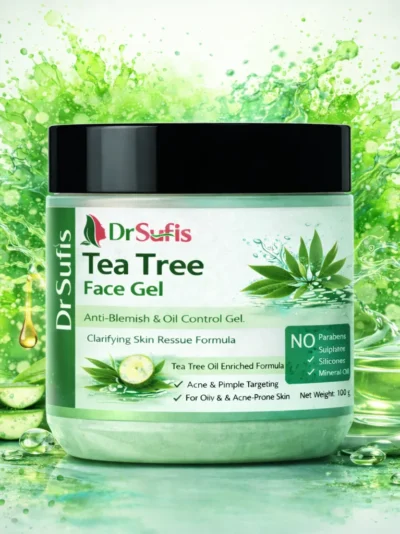
- Dr Sufis Wellness products — Our Tea Tree-based formulations offer gentle antibacterial and anti-inflammatory support for hormonal breakouts. Used consistently, they help reduce the severity of cystic lesions and prevent new ones from forming.
Doctor’s Tip: Hormonal acne almost always needs a doctor’s involvement for lasting results. Topical products help manage symptoms, but if there is an underlying hormonal imbalance like PCOS or androgen excess, that needs to be addressed medically.
Treating Normal Acne
Normal acne responds well to a targeted topical routine and lifestyle adjustments:
- Gentle cleanser — Wash twice daily with a salicylic acid or tea tree-based cleanser to remove excess oil, unclog pores, and reduce bacteria without stripping the skin.
- Salicylic acid — A BHA that penetrates pores and dissolves the dead skin and oil that cause blackheads and whiteheads. Use 1 to 2 times a week.
- Benzoyl peroxide — Kills acne bacteria directly. Effective for pustules and papules. Use a low concentration (2.5%) to minimise irritation.
- Non-comedogenic moisturiser — Always moisturise — even acne-prone skin needs hydration. A lightweight, oil-free gel moisturiser will not clog pores.
- Sunscreen — Daily SPF use prevents post-acne marks from darkening and protects the skin barrier during treatment.
- Diet adjustments — Reduce sugar, refined carbohydrates, and excess dairy. These are among the most consistently supported dietary factors for normal acne improvement.
Treatment Comparison: Hormonal Acne vs Normal Acne
“`html| Hormonal Acne Treatment | Normal Acne Treatment |
|---|---|
| Hormonal evaluation by a doctor (blood tests) | Salicylic acid or BHA cleanser |
| Oral contraceptives or anti-androgens (prescription) | Benzoyl peroxide topical treatment |
| Topical retinoids (adapalene, tretinoin) | Topical retinoids (optional, lower strength) |
| Niacinamide serum to reduce inflammation | Niacinamide serum to control oil and redness |
| Reduce sugar and dairy in diet | Reduce sugar, dairy, and fried food |
| Stress management and sleep hygiene | Consistent cleansing routine — morning and night |
| Tea tree-based topical for bacterial component | Tea tree oil cleanser or spot treatment |
| Patience — results take 3 to 6 months | Results typically visible within 4 to 8 weeks |
When to See a Dermatologist or Skin Physician
I always tell my patients: if your acne is affecting your confidence, your daily life, or not responding to 6 to 8 weeks of proper skincare, it is time to see a professional. Here are the specific situations where you should not wait:
“`htmlSee a doctor if:
- Your acne is deep, cystic, and very painful
- It leaves dark scars or marks that do not fade
- It consistently appears before your period — especially on the chin and jawline
- You have irregular periods, excess facial hair, or unexplained weight gain alongside acne
- Over-the-counter treatments have not worked after 8 weeks
- Your acne is spreading or getting worse despite skincare changes
- You suspect PCOS or another hormonal condition
Early professional intervention prevents scarring, addresses the root cause, and saves you months of trial-and-error with the wrong products.
Frequently Asked Questions
These are the most common questions I receive from patients and readers about hormonal acne vs normal acne:
Final Verdict: Hormonal Acne vs Normal Acne
Let me bring this together simply, the way I would explain it to a patient sitting across from me.
If your acne appears on your chin and jawline, comes predictably before your period, feels deep and painful, and refuses to respond to topical treatments — it is almost certainly hormonal acne. It needs a different approach: hormonal evaluation, possible medical treatment, dietary changes, and targeted topical care.
If your acne appears across your forehead, nose, and cheeks, has no clear pattern, and responds to good skincare habits — it is most likely normal acne. It can be effectively managed with a consistent routine, the right products, and dietary adjustments.
The single most important message in this entire article is this: knowing the difference between hormonal acne and normal acne determines whether your treatment will work.
If you have been treating the wrong type for months, that is why it has not been working. Not because you are doing something wrong — but because the solution starts with the right diagnosis.
If you are unsure which type you have, see a qualified skin professional. In 18 years of practice, the patients who get the fastest results are always the ones who take the time to understand their skin first — and then treat it correctly.
“`html