Acne is one of the most common skin concerns I see in daily routine. — and one of the most emotionally difficult ones. It is not just a skin condition. For many of my patients, acne affects their confidence, their daily life, and how they feel when they look in the mirror.
The first question almost everyone asks me is:
“Doctor, can I treat acne naturally? Without putting chemicals on my face?”
And my honest answer, backed by 18 years of clinical experience, is: yes — many cases of acne, especially mild to moderate acne, respond beautifully to natural remedies when they are used correctly and consistently.
In this guide, I am going to share 12 proven home remedies and natural approaches to treat acne naturally — the same ones I recommend to my patients. I will also explain the science behind acne, what ingredients actually work, and when natural remedies are not enough and you need professional help.
Let us start from the beginning.
What Is Acne and Why Does It Appear?
Acne is a skin condition that happens when your pores become blocked. Every pore on your face is an opening to a tiny hair follicle that also contains a small oil gland. When this oil gland produces too much oil (called sebum), that oil can mix with dead skin cells and block the pore completely.
Once a pore is blocked, it creates the perfect environment for a specific bacteria called Cutibacterium acnes (previously known as Propionibacterium acnes) to multiply. This bacterial activity causes inflammation — and that inflammation is what we see on the skin as pimples, redness, and swelling.
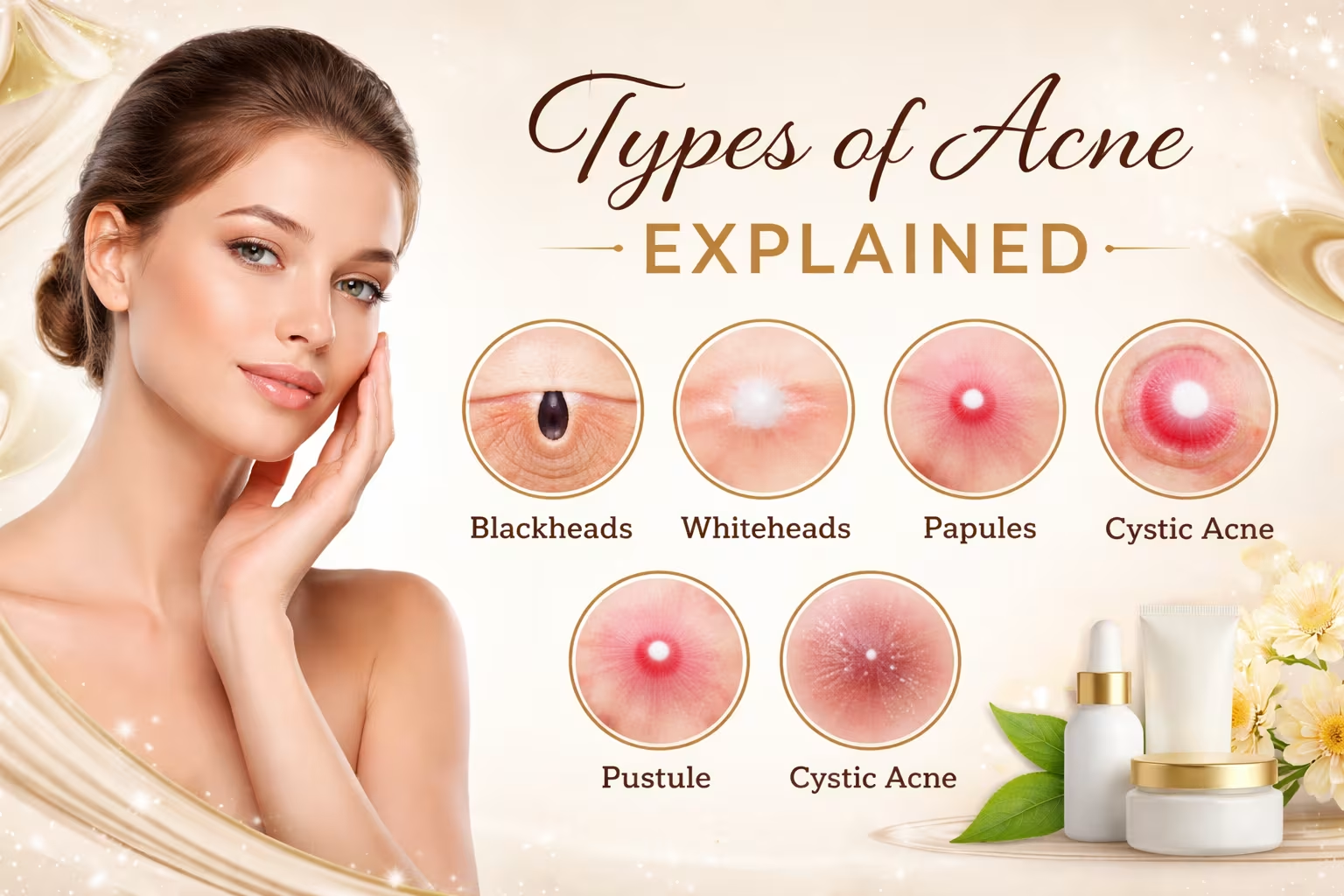
The main forms of acne include:
- Whiteheads — blocked pores that are closed at the surface
- Blackheads — blocked pores that are open at the surface (the dark colour is oxidised oil, not dirt)
- Papules — small, raised red bumps caused by infected or inflamed hair follicles
- Pustules — papules with white or yellow pus at the tip
- Nodules — large, solid, painful lumps deep in the skin
- Cystic acne — painful, pus-filled lumps that are the most severe form and most likely to scar
Natural home remedies work best for whiteheads, blackheads, papules, and pustules. Nodules and cystic acne almost always need professional medical treatment.
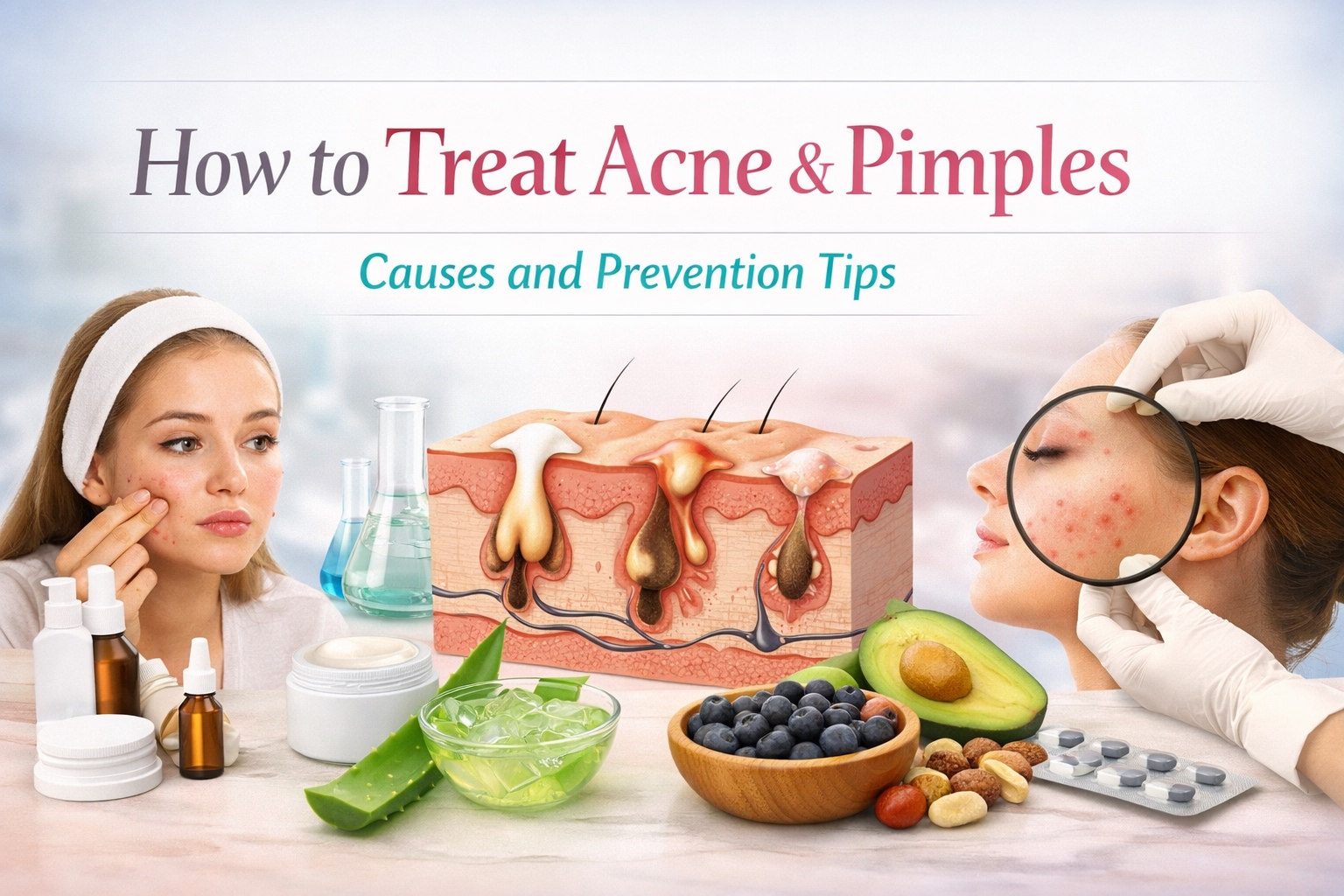
Read Detailed Guide On :How to Treat Acne & Pimples
What Causes Acne? Understanding Your Triggers
One of the most important things I tell my patients is this: understanding what causes your acne is as important as treating it. If you keep triggering the same breakouts, no remedy — natural or medical — will give you lasting results.
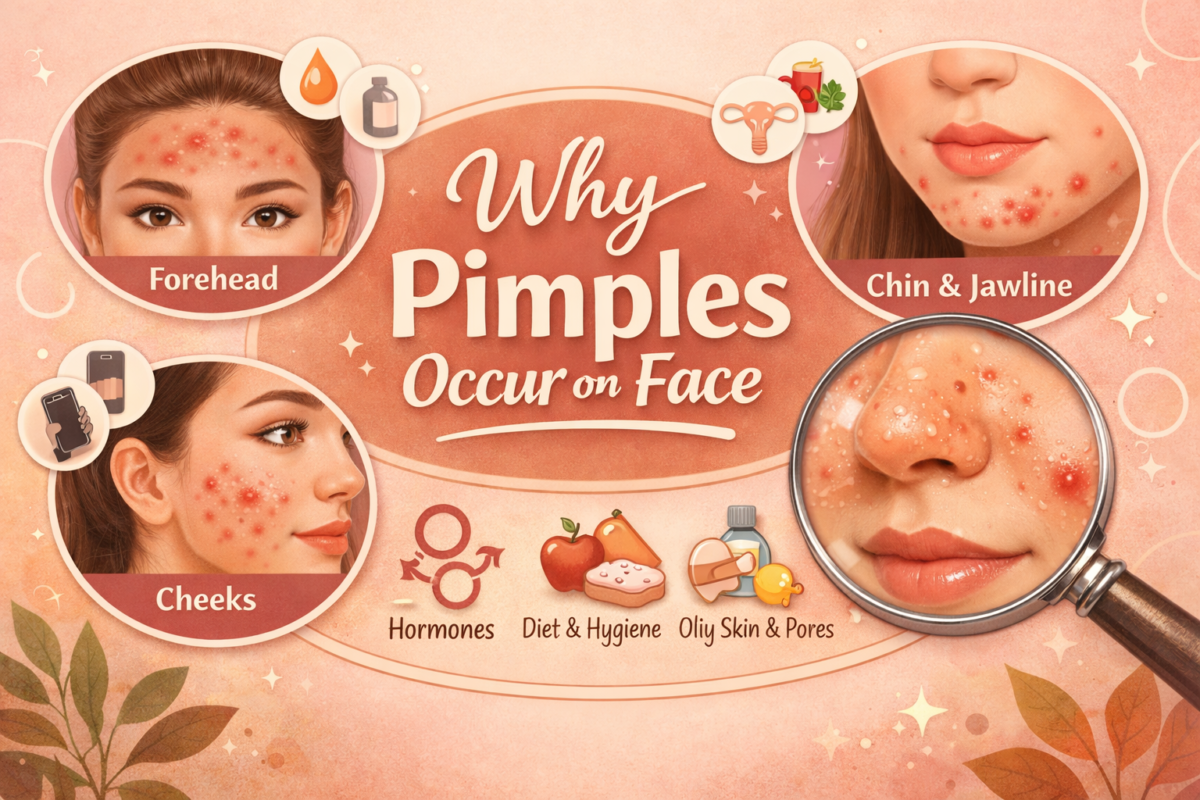
Read : Why Pimples Occur on Face: Causes, Triggers & How to Prevent Them
The most common causes of acne I see in clinic:
The Science Behind Natural Acne Treatments
When patients ask me why natural ingredients can treat acne, I explain it this way: the properties that fight acne — antibacterial activity, anti-inflammation, sebum control, and skin barrier support — are found in many natural substances. Nature invented these long before pharmaceutical companies did.
Here is what research shows about the key mechanisms:
- Tea tree oil contains terpinen-4-ol, which has proven antibacterial activity against C. acnes bacteria
- Aloe vera contains compounds called polysaccharides that reduce inflammation and promote skin healing
- Turmeric contains curcumin, one of the most studied natural anti-inflammatory and antibacterial compounds
- Honey — especially raw honey — is naturally antibacterial and creates an inhospitable environment for bacteria
- Neem contains nimbidin and nimbin, compounds with demonstrated antibacterial and anti-inflammatory properties
- Green tea contains EGCG (epigallocatechin gallate), which reduces sebum production and fights inflammation
These are not folk remedies based on tradition alone. Many of them have genuine scientific studies behind them. That said, I always remind my patients: natural ingredients work best for mild to moderate acne, used consistently, as part of a complete skincare routine.
Natural Ingredients That Treat Acne — What Actually Works
1. Tea Tree Oil for Acne
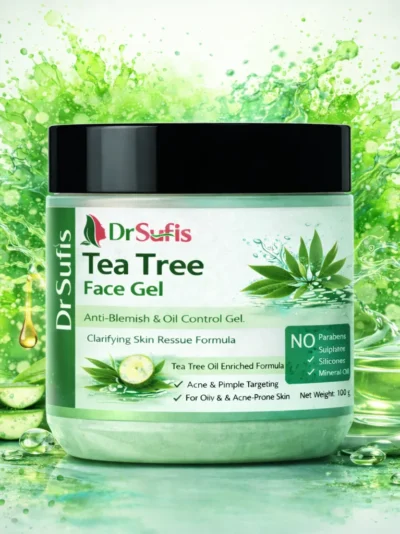
Tea tree oil is one of the most well-researched natural acne treatments available. Multiple clinical studies have shown that a 5% tea tree oil solution is as effective as 5% benzoyl peroxide for treating mild to moderate acne — with fewer side effects like dryness and peeling.
It works by killing the acne-causing bacteria C. acnes on the skin surface and reducing the inflammation that causes redness and swelling.
Important: Never apply undiluted tea tree oil directly to the skin. It must always be diluted with a carrier oil (like jojoba or aloe vera gel) at a ratio of 1 drop of tea tree oil to 9 drops of carrier. Undiluted tea tree oil can cause burns and irritation.
2. Aloe Vera for Acne
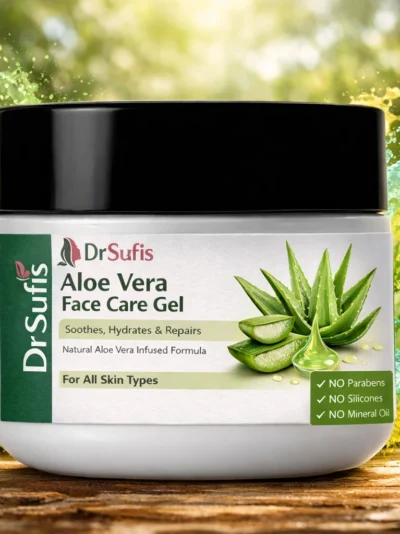
Aloe vera is one of my personal favourites for acne-prone skin — and one I recommend to almost every patient with active breakouts. Its anti-inflammatory properties reduce redness and swelling around pimples quickly, while its natural enzymes promote healing and prevent scarring.
Aloe vera gel is also an excellent moisturiser for acne-prone skin — it hydrates without clogging pores, which is crucial because many acne patients avoid moisturiser and end up with a dehydrated, irritated skin barrier that makes acne worse.
At Dr Sufis Wellness, our Aloe Vera Soothing Gel is formulated for exactly this purpose — it calms active breakouts, reduces redness, and moisturises acne-prone skin without any ingredients that clog pores.
3. Turmeric for Acne
Turmeric — or haldi as we call it in Indian households — has been used for skin for thousands of years, and modern science confirms why. Curcumin, the active compound in turmeric, is a powerful anti-inflammatory and antibacterial agent that directly targets the bacteria and inflammation involved in acne.
When used as a face mask, turmeric reduces active pimple inflammation, brightens post-acne dark marks, and calms overall skin redness. I particularly recommend turmeric-based masks to my patients dealing with acne combined with hyperpigmentation — a very common combination in Indian skin types.
Caution: Raw turmeric can temporarily stain fair skin yellow. Use small amounts, leave on for a maximum of 10 to 15 minutes, and rinse thoroughly. Consider mixing with honey or aloe vera to reduce staining.
4. Honey for Acne
Raw, unprocessed honey is a natural antibacterial agent — its low pH, hydrogen peroxide content, and high sugar concentration create an environment where bacteria simply cannot survive. Studies have shown that raw honey can reduce the bacteria that cause acne while simultaneously soothing inflamed skin.
It also has natural wound-healing properties that help existing pimples heal faster and reduce the risk of post-acne scarring. I often recommend it as a spot treatment or as part of a face mask for patients with active, inflamed breakouts.
5. Neem for Acne
Neem is one of the most potent natural antibacterial and anti-inflammatory plants used in Ayurvedic medicine. Its active compounds — nimbidin and nimbin — have demonstrated antibacterial activity specifically against the bacteria responsible for acne.
Neem also regulates sebum production, which addresses one of the root causes of acne rather than just treating the surface symptoms. I find it particularly effective for patients with oily, acne-prone skin who struggle with constant breakouts.
6. Green Tea for Acne Inflammation
Green tea is a lesser-known but genuinely effective natural remedy for acne. The compound EGCG found in green tea has been shown in studies to reduce sebum production and decrease the inflammatory response in acne lesions. Applied topically as a cooled tea compress or a DIY green tea toner, it can visibly calm active breakouts within days.
12 Proven Home Remedies to Treat Acne Naturally
Here are the 12 home remedies I most frequently recommend to patients with mild to moderate acne. Each one is backed by evidence and can be made at home with simple ingredients.
12 Natural Remedies to Treat Acne at Home
Gentle, practical remedies for mild acne, active pimples, excess oil, and inflamed breakouts.
Diluted Tea Tree Oil Spot Treatment
Ingredients: 1 drop tea tree oil + 9 drops jojoba oil or aloe vera gel
How to use: Cleanse face. Dip a cotton bud into the mixture and apply directly to individual pimples only. Do not spread across the full face.
Frequency: Twice daily on active spots. Results visible in 3 to 5 days.
Raw Honey Spot Treatment
Ingredients: Small amount of raw, unprocessed honey
How to use: Apply a tiny dot of raw honey directly onto a pimple. Leave on for 20 minutes or overnight (cover with a small bandage to avoid mess). Rinse gently.
Frequency: Daily on active pimples. Reduces inflammation within 24 to 48 hours.
Turmeric and Honey Face Mask
Ingredients: 1/2 teaspoon turmeric powder + 1 tablespoon raw honey + a few drops of lemon juice (optional, for brightening)
How to use: Mix into a paste. Apply evenly to the face avoiding the eye area. Leave for 10 to 15 minutes. Rinse with lukewarm water and pat dry.
Frequency: 2 to 3 times per week. Best used in the evening to avoid sun sensitivity from turmeric.
Aloe Vera and Neem Treatment
Ingredients: 2 tablespoons fresh aloe vera gel + 5 to 6 drops neem oil (or 1 tablespoon neem powder made into a paste)
How to use: Mix together thoroughly. Apply as a thin layer across acne-prone areas. Leave for 15 to 20 minutes. Rinse with cool water.
Frequency: Daily for oily or combination acne-prone skin.
Green Tea Toner
Ingredients: 1 green tea bag + 1 cup hot water
How to use: Brew the tea and allow to cool completely. Pour into a clean bottle. Apply with a cotton pad after cleansing as a toner. Do not rinse.
Frequency: Morning and night after cleansing. Can be refrigerated for up to 5 days.
Ice Cube Inflammation Reducer
Ingredients: 1 to 2 ice cubes wrapped in a clean cloth
How to use: Hold the wrapped ice cube gently against an active, inflamed pimple for 1 to 2 minutes. Remove. Repeat 2 to 3 times with short breaks.
Frequency: Use as needed when a pimple is newly appearing and painful. Reduces swelling and slows inflammation quickly.
Apple Cider Vinegar Toner (Diluted)
Ingredients: 1 part raw apple cider vinegar + 3 parts water (sensitive skin: 1 part to 4 parts water)
How to use: Mix thoroughly. Apply with a cotton pad to acne-prone areas after cleansing. Allow to dry fully. Follow with moisturiser.
Frequency: Once daily (evening only). Always patch test first. Discontinue if irritation occurs.
Multani Mitti (Fuller’s Earth) Mask
Ingredients: 2 tablespoons multani mitti + rose water to make a smooth paste
How to use: Apply evenly to the face. Leave until almost dry (about 10 to 12 minutes — do not let it fully dry as this strips moisture). Rinse with cool water.
Frequency: Once a week for oily or acne-prone skin. Absorbs excess oil and unclogs pores.
Turmeric and Neem Face Pack
Ingredients: 1/4 teaspoon turmeric + 1 tablespoon neem powder + rose water or aloe vera gel to make a paste
How to use: Mix into a smooth paste. Apply to acne-prone areas. Leave for 15 minutes. Rinse thoroughly with lukewarm water.
Frequency: 2 to 3 times per week. One of the most effective combinations for bacterial acne and oily skin.
Cinnamon and Honey Mask
Ingredients: 1 teaspoon raw honey + 1/4 teaspoon cinnamon powder
How to use: Mix into a paste. Apply as a face mask or as a spot treatment on active pimples. Leave for 10 to 15 minutes. Rinse gently.
Frequency: 2 times per week. Cinnamon enhances honey’s antibacterial effect — a powerful combination for inflamed acne.
Witch Hazel Toner
Ingredients: Alcohol-free witch hazel (available at pharmacies and online)
How to use: Apply to a cotton pad and sweep across cleansed, acne-prone skin. Focus on the T-zone and active breakout areas. Do not rinse.
Frequency: Once daily (morning). Controls oil, tightens pores, and reduces surface bacteria throughout the day.
Overnight Aloe Vera Spot Treatment
Ingredients: Fresh aloe vera gel (from the leaf) or a high-quality pure aloe vera gel
How to use: Apply a generous layer of aloe vera gel directly onto active pimples or red, inflamed areas as the last step of your night routine. Leave overnight. Rinse gently in the morning.
Frequency: Every night. One of the safest and most gentle remedies — suitable for all skin types including sensitive skin.
Natural Skincare Routine for Acne-Prone Skin
Home remedies work best when they are part of a structured daily routine. Here is the natural skincare routine for acne I recommend to my patients:
Morning Routine:
- Natural Face Wash for Acne — Use a gentle, pH-balanced cleanser. Avoid foaming cleansers with sulfates that strip the skin.
- Green Tea Toner — Apply with a cotton pad as your balancing step.
- Aloe Vera Gel — Your lightweight, non-comedogenic moisturiser. Hydrates without clogging pores.
- Sunscreen SPF 30+ — Non-negotiable. UV exposure worsens post-acne pigmentation significantly.
Evening Routine:
- Double Cleanse — Oil cleanser first (to remove sunscreen and pollution), then gentle face wash.
- Toner — Green tea toner or diluted ACV toner to balance pH.
- Treatment Step — Apply your chosen natural remedy: tea tree spot treatment, neem-aloe gel, or turmeric mask (on mask days).
- Moisturiser — Aloe vera gel or a lightweight non-comedogenic moisturiser.
- Night Cream (optional) — A gentle, acne-safe night cream to support overnight skin repair.
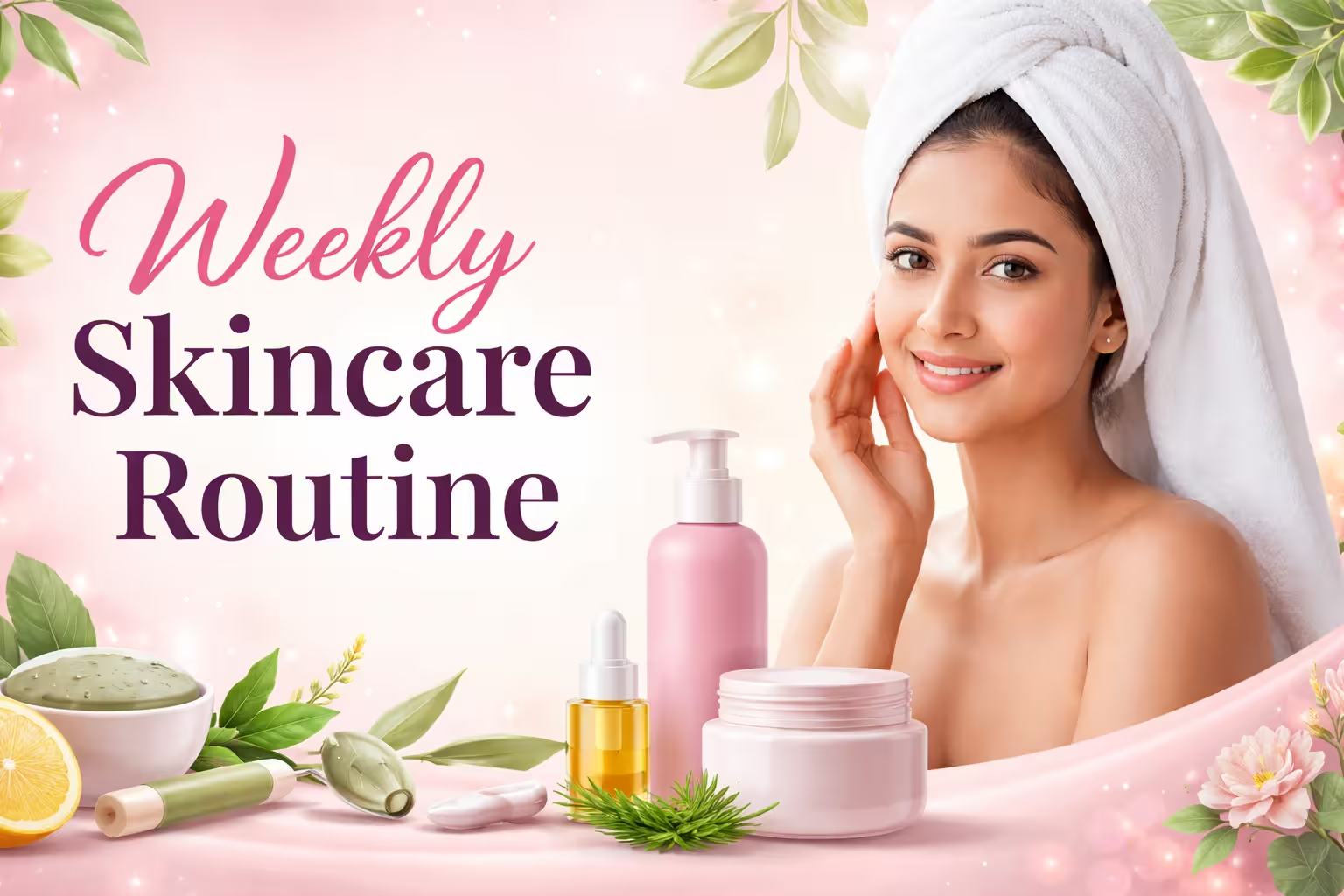
Weekly (1 to 2 Times):
- Exfoliation — gentle physical or chemical exfoliation to remove dead skin cells
- Clay mask — Multani Mitti or kaolin clay to deep-cleanse pores
- Nourishing treatment mask — turmeric-honey or neem-turmeric pack
Diet Tips to Reduce Acne Naturally
One of the most underestimated parts of treating acne naturally is what you eat. After 18 years of treating acne patients, I can tell you clearly: diet matters. What you put into your body directly affects how much oil your skin produces and how inflamed it becomes.
Foods That Help Clear Skin
Foods That Trigger Acne:
- Dairy products — Milk and dairy contain hormones that stimulate oil production and worsen hormonal acne. I ask patients with persistent acne to try reducing dairy for 4 to 6 weeks and observe their skin.
- High-sugar foods and drinks — Sugar causes rapid insulin spikes, which trigger a hormonal cascade that increases oil production. Soft drinks, sweets, white bread, and pastries are particularly problematic.
- High-glycaemic index foods — White rice, white bread, and processed foods spike blood sugar and worsen acne in many patients.
- Processed and fried foods — High in omega-6 fatty acids which increase inflammation throughout the body, including in the skin.
Lifestyle Habits to Prevent Acne Naturally
Beyond products and diet, certain daily habits have a significant impact on acne. These are the lifestyle changes I recommend alongside any acne treatment:
- Manage stress actively — Stress raises cortisol, which directly stimulates oil glands. Even 10 minutes of deep breathing, meditation, or a walk daily makes a measurable difference to acne-prone skin.
- Prioritise sleep — Your skin repairs and regenerates while you sleep. Chronic sleep deprivation elevates cortisol and impairs the skin’s healing process. Aim for 7 to 8 hours every night.
- Stay hydrated — Dehydrated skin overproduces oil to compensate for the lack of moisture. Drinking enough water daily is one of the simplest and most overlooked acne prevention habits.
- Change pillowcases twice a week — Your pillowcase accumulates oil, dead skin cells, and bacteria from your hair and face every night. Sleeping on the same pillowcase for a week is like pressing your face into a bacteria-covered surface every night.
- Stop touching your face — I know this is difficult. But every time you touch your face, you transfer bacteria from your hands to your pores. This is one of the most common and most underestimated acne triggers.
- Clean your phone screen daily — Your phone screen carries a surprising amount of bacteria. If you press it against your face during calls, you are introducing bacteria directly to your skin multiple times a day.
- Exercise regularly — Exercise improves circulation and reduces stress hormones. Just make sure to cleanse your face immediately after exercise to remove sweat before it can clog pores.
Common Mistakes When Trying to Treat Acne Naturally
Even well-intentioned natural treatments can backfire when done incorrectly. Here are the mistakes I see most often in my clinic:
- Applying undiluted essential oils — Tea tree oil, lemon oil, and other essential oils must always be diluted. Applying them neat to the skin can cause chemical burns, increased sensitivity, and permanent pigmentation.
- Squeezing or popping pimples — This is one of the most damaging things you can do to acne-prone skin. It pushes bacteria deeper, causes more inflammation, and almost always leads to post-acne scarring and dark marks that take months to fade.
- Over-washing the face — Washing your face more than twice a day strips natural oils and triggers even more oil production. More washing does not mean cleaner skin — it means more irritated skin.
- Skipping moisturiser — Acne-prone skin still needs hydration. Skipping moisturiser causes the skin barrier to weaken and oil production to increase. Use a lightweight, non-comedogenic moisturiser like aloe vera gel.
- Expecting overnight results — Natural remedies are not instant. Most require consistent use for 4 to 8 weeks before significant visible improvement. Abandoning a remedy after one week because it has not worked is one of the most common reasons people never see results.
- Skipping sunscreen when using natural acids — Lemon juice, apple cider vinegar, and turmeric all increase photosensitivity. If you use any of these, sunscreen during the day is absolutely essential — not optional.
When Natural Remedies Are Not Enough — When to See a Doctor
I am a strong advocate for natural skincare, but I am also a doctor — and I have a responsibility to be honest with my patients.
Natural remedies work well for mild to moderate acne. But there are situations where they are simply not sufficient, and delaying professional treatment can lead to permanent scarring and long-term skin damage.
Please consult a qualified dermatologist or skin physician if:
- Your acne is severe, with large, painful nodules or cysts
- Your acne is leaving scars or persistent dark marks despite consistent treatment
- You have tried natural remedies consistently for 8 to 12 weeks with no improvement
- Your acne is accompanied by other symptoms suggesting hormonal issues (irregular periods, excess hair growth, significant weight changes)
- Your acne is causing significant emotional distress or affecting your daily life
- The breakouts are coming back repeatedly in the same areas despite treatment
Cystic acne and nodular acne almost always require prescription treatment — such as antibiotics, retinoids, or in some cases hormonal therapy. Natural remedies used alone for severe acne can delay effective treatment and may result in permanent scarring. It is important not to wait too long before seeking professional medical advice if acne becomes painful, deep, or persistent.
Frequently Asked Questions
Here are the questions my patients and readers ask most often about treating acne naturally:
1. Can acne be treated completely naturally?
Mild to moderate acne can be very effectively managed with natural remedies, a consistent skincare routine, and dietary and lifestyle changes. However, severe acne — particularly cystic or nodular acne — typically requires medical treatment. The key is matching the treatment intensity to the severity of the acne.
2. What is the fastest natural remedy for a pimple?
For a pimple that has appeared quickly, the fastest natural options are: an ice cube held against the pimple for 1 to 2 minutes to reduce swelling, a raw honey spot treatment left overnight, or diluted tea tree oil applied directly to the spot. These can reduce the size and redness of an active pimple within 24 to 48 hours.
3. Does tea tree oil really work for acne?
Yes — tea tree oil is one of the best-researched natural acne treatments. Clinical studies show that a 5% solution is comparable to 5% benzoyl peroxide in effectiveness. However, it must always be properly diluted before application. Undiluted tea tree oil can cause irritation and damage.
4. Is aloe vera good for acne?
Aloe vera is excellent for acne-prone skin. It reduces inflammation and redness around active pimples, promotes faster healing, prevents scarring, and provides non-comedogenic hydration — meaning it moisturises without clogging pores. It is one of the most versatile and gentle natural remedies for acne of all skin types.
5. Does diet really affect acne?
Yes, significantly. Research and my clinical experience both confirm that high-sugar diets, dairy consumption, and high-glycaemic foods can worsen acne by triggering hormonal and insulin responses that increase oil production. Reducing these foods while adding omega-3s, zinc, and antioxidants can make a visible difference within 4 to 6 weeks.
6. How long do natural acne remedies take to work?
Natural remedies typically require consistent use for 4 to 8 weeks before significant visible improvement. Some patients see faster results — reduced redness and fewer new pimples within 2 to 3 weeks. The key word is consistency. Using a remedy a few times and then stopping will not produce results.
7. Can I use multiple natural remedies together?
Yes, but with care. Using complementary remedies together — like aloe vera as a daily moisturiser combined with a weekly turmeric-honey mask and tea tree oil as a spot treatment — is perfectly safe and often more effective than any single remedy alone. What to avoid is overloading the skin with too many actives at once, which can cause irritation.
8. Is lemon juice good for acne?
Lemon juice is frequently recommended online for acne, but I advise caution with this one. While its citric acid content does have some antibacterial and brightening properties, lemon juice is highly acidic and can cause significant irritation, burns, and hyperpigmentation — especially in Indian skin tones. If you choose to use it, dilute it significantly and never go out in the sun after application.
9. How do I reduce acne scars naturally?
Natural ingredients that help fade post-acne marks include: turmeric (brightening, anti-inflammatory), Vitamin C (in the form of rosehip oil or Vitamin C serums), aloe vera (skin renewal), and our Kumkumadi Facial Oil which contains traditional brightening ingredients specifically formulated for Indian skin. Daily sunscreen is also essential — UV exposure makes dark marks significantly darker and harder to fade.
10. When should I stop using natural remedies and see a doctor?
See a doctor if: your acne is severe or cystic, you have tried consistent natural remedies for 8 to 12 weeks without improvement, your acne is leaving scars, or it is causing significant emotional distress. Early professional intervention for severe acne prevents permanent scarring — please do not delay.
Conclusion
Acne is one of the most treatable skin conditions — but it requires patience, consistency, and the right approach.
In my 18 years of clinical practice, I have seen natural remedies genuinely transform mild to moderate acne when they are used correctly, consistently, and as part of a complete approach that includes diet, lifestyle, and a proper skincare routine.
The 12 home remedies I have shared in this guide are not internet trends. They are ingredients with genuine scientific evidence behind them — used by dermatologists, cosmetologists, and Ayurvedic practitioners for good reason.
Start with one or two remedies that feel right for your skin type. Build a consistent morning and evening routine. Pay attention to your diet. Manage your stress. Protect your skin with sunscreen every day. And give your skin at least 6 to 8 weeks before evaluating the results.
Most importantly — be gentle with yourself and with your skin. Acne does not define you. And it is absolutely possible to have clear, healthy skin naturally. I see it happen in my clinic every single week.
Clear skin is not about perfection. It is about giving your skin what it needs — consistent care, the right ingredients, and a little patience. Nature has provided us with powerful tools. We just have to use them wisely.