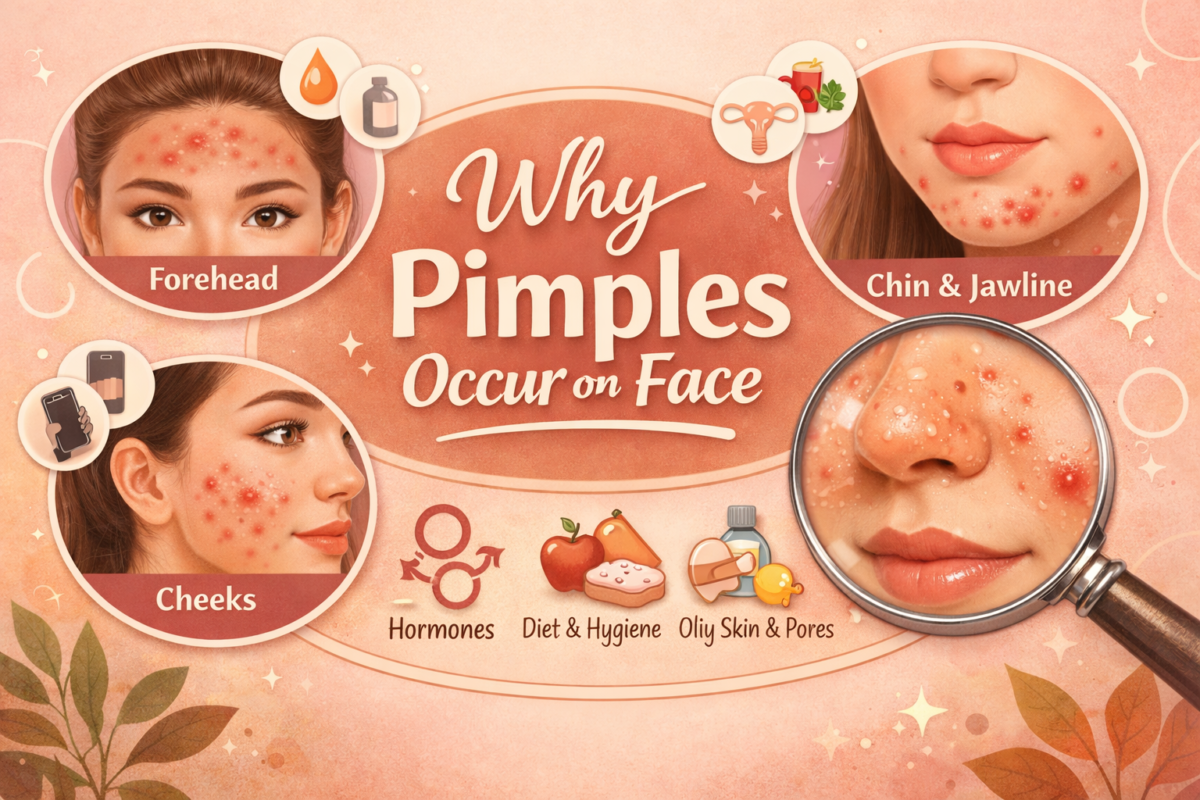
Acne is one of the most common skin concerns I saw in my carrier — affecting teenagers, young adults, and even people well into their 40s and 50s. But here is something many people do not realise: there are different types of acne, and each one has a different cause, a different appearance, and a different treatment.
This matters more than most people think. Treating the wrong type of acne with the wrong product will not just fail to help — it can actually make things worse.
I have seen patients spend months using a scrub on cystic acne, or a drying spot treatment on comedones, with no results and growing frustration.
After 18 years of treating acne types on the face and body, I can tell you: the single most important step in acne treatment is correctly identifying what type of acne you have. Once you know that, the treatment becomes much clearer.
In this guide, I will walk you through every type of acne — from the mildest blackhead to the most severe cystic acne — in plain, simple language. By the end, you will know exactly what you are dealing with and what to do about it.
How Many Types of Acne Are There?
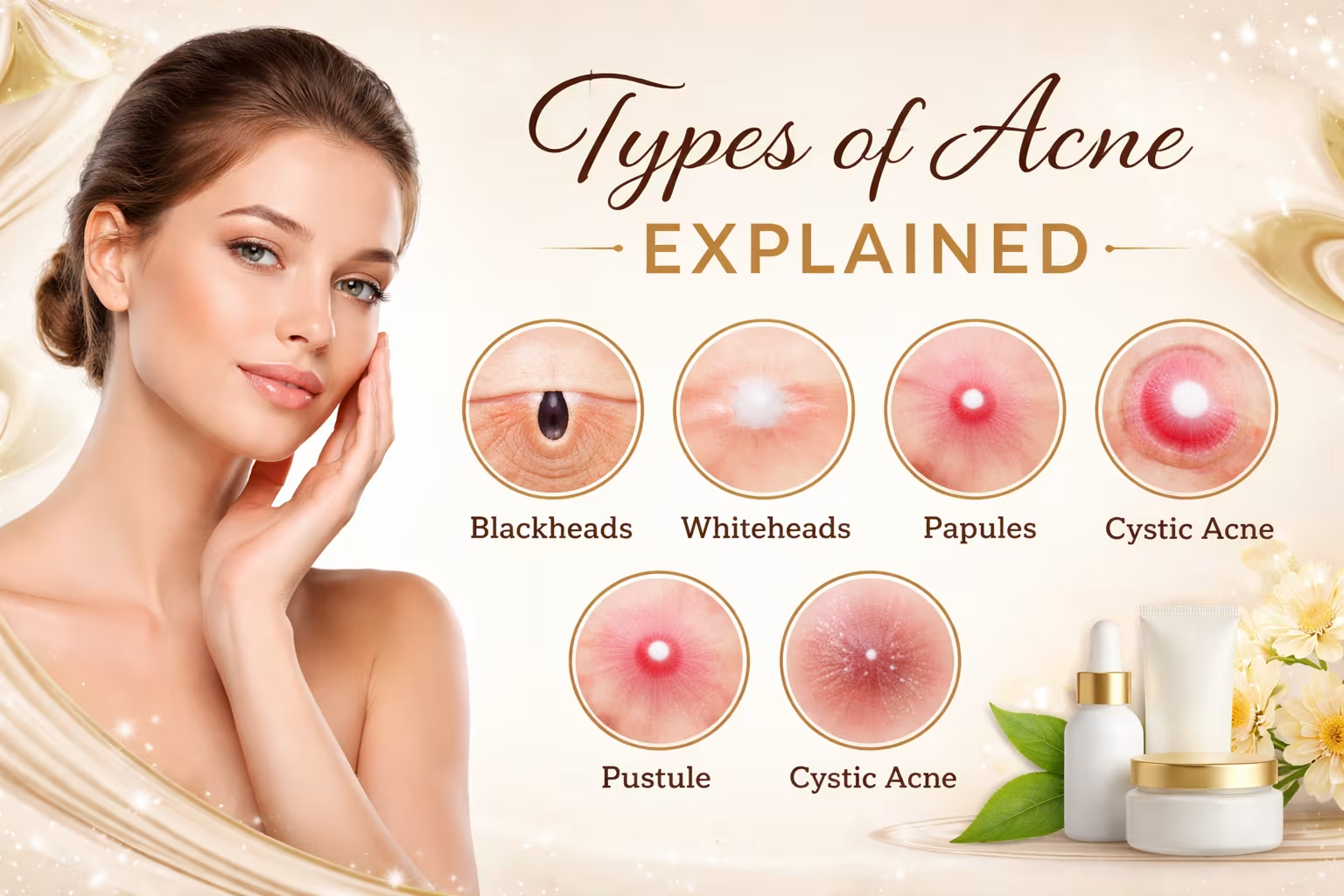
There are 6 main types of acne, divided into two broad categories:
Non-Inflammatory Acne: Blackheads (open comedones), Whiteheads (closed comedones)
Inflammatory Acne: Papules, Pustules, Nodules, Cystic Acne
Non-inflammatory acne does not involve redness or swelling. It is caused by clogged pores without bacterial infection or significant immune response.
Inflammatory acne involves redness, swelling, pain, and in many cases pus. It occurs when bacteria gets involved and the immune system reacts. Inflammatory acne is generally more serious and harder to treat at home.
Most people do not have just one type of acne — they have a mix. Understanding your dominant type helps determine the best treatment approach.
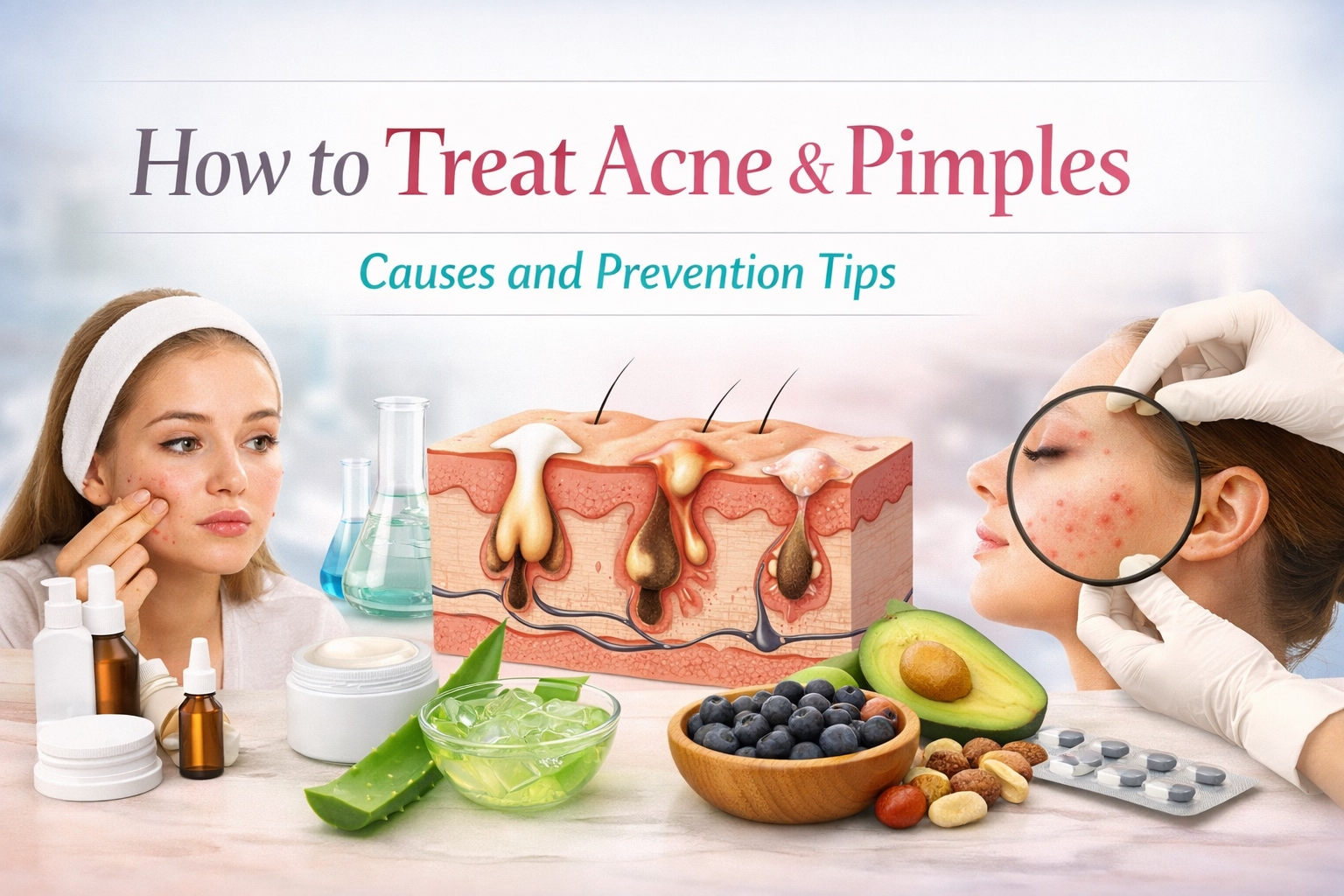
Read our detailed guide on : How to Treat Acne & Pimples
Non-Inflammatory Types of Acne
Non-inflammatory acne is the mildest category. These types of acne are caused by clogged pores but do not involve significant bacterial activity or immune response. They are generally easier to treat with the right over-the-counter products.
Blackheads (Open Comedones)
Severity: Mild
Blackheads are one of the most common types of acne. They form when a pore becomes clogged with excess oil and dead skin cells, but the top of the pore remains open. When the clogged material is exposed to air, it oxidises — and this oxidation is what turns it dark or black. It is not dirt, which is a very common misunderstanding I correct in my clinic every week.
Key Sign: Small, dark or black spots on the surface of the skin — most commonly on the nose, chin, and forehead.
Treatment: Salicylic acid cleansers, gentle chemical exfoliation, pore strips (occasional use), non-comedogenic moisturisers.
Doctor’s Tip: Do NOT squeeze blackheads. Squeezing pushes bacteria deeper into the pore, can cause scarring, and often makes the blackhead worse. Use a salicylic acid product consistently instead — it dissolves the clog from inside the pore.
Whiteheads (Closed Comedones)
Severity: Mild
Whiteheads are very similar to blackheads, but with one key difference: the pore opening is closed or very narrow. Because the clogged material is not exposed to air, it does not oxidise — and it stays white or flesh-coloured. Whiteheads are extremely common and often appear as tiny white bumps across the forehead, nose, and chin.
Key Sign: Small, flesh-coloured or white raised bumps with a closed surface — the skin appears to be covering the clog.
Treatment: Retinoids (retinol or tretinoin), salicylic acid, gentle exfoliation, keeping pores clear with non-comedogenic products.
Doctor’s Tip: Retinol is one of the most effective ingredients for whiteheads. It increases cell turnover, helping the skin shed dead cells before they can clog pores. Start with a low concentration and use it at night.
Inflammatory Types of Acne
Inflammatory acne is more serious than non-inflammatory acne. It involves the bacteria C. acnes multiplying inside clogged pores and triggering an immune response — which is what creates the redness, swelling, heat, and pain we associate with severe acne.
Inflammatory acne types range from mild to very severe. They generally require more targeted treatment than non-inflammatory types, and the more severe forms often need professional medical treatment.
Papules
Severity: Mild to Moderate
Papules are the first stage of inflammatory acne. They form when a blocked pore becomes inflamed — the wall of the follicle breaks down due to bacterial activity and immune response. The result is a small, firm, raised red bump. Unlike pustules, papules do not have a visible white or yellow centre. They are solid and often tender to the touch.
Key Sign: Small, firm, raised red or pink bumps — no visible pus or white head. Often tender when pressed.
Treatment: Benzoyl peroxide (kills acne bacteria), topical antibiotics (prescribed), salicylic acid, avoid squeezing at all costs.
Doctor’s Tip: Papules look tempting to squeeze because they are raised and red — but they have no opening. Squeezing a papule causes trauma to the skin, pushes bacteria deeper, and almost always leads to a darker, longer-lasting mark.
Pustules
Severity: Moderate
Pustules are what most people picture when they think of a classic pimple. They are similar to papules but have progressed further — the pore is inflamed and now filled with a mixture of white blood cells, bacteria, and dead skin cells, which creates the visible white or yellow pus-filled centre. They are red and inflamed at the base with a white or yellow tip.
Key Sign: Red, inflamed base with a visible white or yellow pus-filled head at the centre.
Treatment: Benzoyl peroxide spot treatment, salicylic acid, warm compress to encourage natural drainage, topical antibiotics if widespread.
Doctor’s Tip: The white head you see in a pustule is pus — white blood cells fighting bacteria. A warm compress held against it for a few minutes can help it drain naturally and heal faster. Forced squeezing tears skin tissue and causes scarring.
Nodules
Severity: Severe
Nodules are a significantly more serious type of acne. They form deep under the skin when a pore ruptures internally and the infection spreads to surrounding tissue. Unlike papules and pustules, nodules are large, hard, and deeply embedded. They are very painful to touch and do not have a visible head. Nodular acne almost always leaves scarring if not treated properly — and home remedies are rarely effective.
Key Sign: Large, hard, painful lumps deep under the skin — no visible head. Feels like a firm ball under the skin surface.
Treatment: This type requires a dermatologist. Oral antibiotics, topical retinoids, intralesional steroid injections for fast reduction.
Doctor’s Tip: If you have nodular acne, please do not attempt to treat it at home with spot creams. The infection is deep in the skin tissue and surface treatments cannot reach it. Early dermatological intervention prevents permanent scarring.
Cystic Acne
Severity: Most Severe
Cystic acne is the most severe and most painful type of acne. Like nodules, cysts form deep under the skin — but they are larger, softer, and filled with pus. Cysts feel like a soft, fluctuant lump under the skin and are almost always painful.
Cystic acne is most commonly caused by hormonal fluctuations, which is why it appears frequently around the jawline, chin, and lower face in adult women. It carries the highest risk of permanent scarring of all acne types.
Key Sign: Large, soft, pus-filled, painful lumps deep under the skin. Warm and tender to touch. Most commonly on jawline, chin, cheeks.
Treatment: Requires a dermatologist. Oral antibiotics, isotretinoin (Accutane) for severe cases, hormonal therapy (for women), intralesional steroids.
Acne Type Comparison: At a Glance
| Acne Type | Appearance | Has Pus? | Painful? | Severity | Home Treatable? |
|---|---|---|---|---|---|
| Blackheads | Dark spots | No | No | Mild | Yes |
| Whiteheads | White bumps | No | No | Mild | Yes |
| Papules | Red bumps | No | Mild | Moderate | Often |
| Pustules | Red + white tip | Yes | Mild | Moderate | Often |
| Nodules | Hard deep lumps | No | Severe | Severe | No |
| Cystic Acne | Soft deep lumps | Yes | Severe | Most Severe | No |
How to Identify Your Acne Type
Use this simple step-by-step approach I walk patients through in my clinic:
- Look at the surface — Is the blemish open (dark) or closed (white/flesh-coloured) without inflammation? You likely have blackheads or whiteheads.
- Check for redness and swelling — Is there redness around the blemish? This indicates inflammation — meaning papules, pustules, nodules, or cysts.
- Look for a visible head — Can you see a white or yellow centre? If yes, it is likely a pustule. If it is red with no head, it is a papule.
- Feel the depth — Is the blemish on the surface or does it feel deep and hard under the skin? Deep and hard = nodule. Deep and soft/painful = cystic acne.
- Check the location — Cystic acne and hormonal acne tend to appear on the jawline, chin, and lower face. Blackheads and whiteheads are most common on the T-zone.
- Assess the pain — Blackheads and whiteheads are painless. Papules and pustules are mildly tender. Nodules and cysts are significantly painful.
If you are still unsure after going through these steps, please see a qualified cosmetologist or dermatologist. Correct identification is the most important step in effective acne treatment — it is always worth getting right.
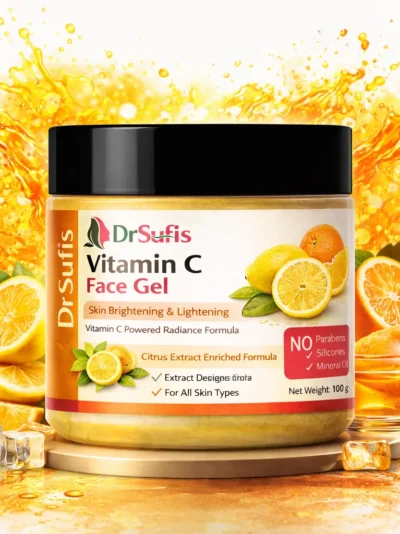
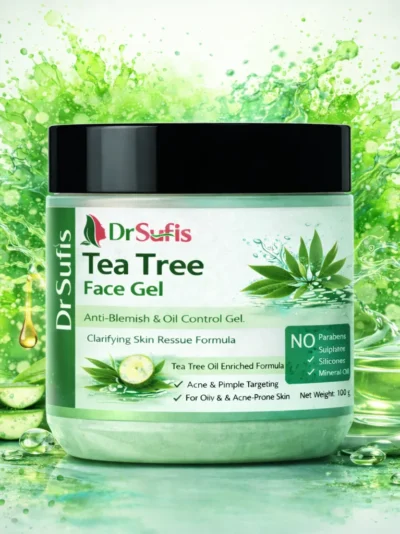
Our Tea Tree Face Gel is formulated specifically for acne-prone skin — it delivers the antibacterial benefits of tea tree oil in a gentle, non-drying gel that is safe for daily use. Our Vitamin C Face Gel is ideal for addressing the dark marks and hyperpigmentation that acne often leaves behind.
Best Treatment for Each Acne Type
Treatment for Blackheads and Whiteheads
- Use a salicylic acid cleanser twice daily to dissolve pore blockages
- Apply a retinol serum or cream at night — start 2 to 3 times per week
- Exfoliate gently once or twice a week with a mild chemical exfoliant
- Always use non-comedogenic moisturiser and sunscreen
- Avoid heavy makeup and always cleanse thoroughly at night
Treatment for Papules and Pustules
- Apply a benzoyl peroxide spot treatment directly onto the blemish
- Use a salicylic acid or tea tree face gel as your daily cleanser
- Apply a warm compress to pustules to encourage natural, gentle drainage
- Use niacinamide serum to reduce inflammation and control oil production
- If widespread or persistent, see a doctor for a topical antibiotic prescription
Treatment for Nodules and Cystic Acne
- See a dermatologist or cosmetologist immediately — do not attempt home treatment
- Oral antibiotics (doxycycline or minocycline) are commonly prescribed
- Intralesional steroid injections can reduce a painful nodule or cyst within 24 to 48 hours
- Isotretinoin (Accutane) is the gold standard for severe cystic acne — prescribed and monitored by a doctor
- For women with hormonal cystic acne, hormonal therapy may be recommended
- Use gentle, non-irritating skincare during treatment — avoid all harsh scrubs and actives
Doctor’s Tip: The best acne treatment cream or spot product in the world cannot reach nodular or cystic acne — these lesions are too deep in the skin for surface treatments. Please do not delay seeing a professional for these types.
Recommended Daily Skincare Routine for Acne-Prone Skin
Morning Routine:
- Gentle, sulfate-free cleanser
- Niacinamide serum — controls oil, reduces redness
- Lightweight, oil-free moisturiser
- SPF 30+ sunscreen — non-comedogenic formula (essential — acne marks darken without it)
Night Routine:
- Double cleanse — oil cleanser first if wearing sunscreen, then face wash
- Salicylic acid toner or treatment — clears pores while you sleep
- Retinol or benzoyl peroxide spot treatment (alternate nights if using both)
- Lightweight night moisturiser or our Night Cream for Acne-Prone Skin — hydrating without clogging pores
Yo must need to know whats the correct order to applying skincare routine. find out here.
Prevention Tips — How to Stop Acne Before It Starts
- Always cleanse your face morning and night — never sleep without cleansing
- Change your pillowcase every 3 to 4 days — it collects oil and bacteria
- Keep your hands away from your face throughout the day
- Use only non-comedogenic skincare and makeup products
- Eat a balanced diet — high-sugar and high-dairy diets are linked to acne flares in many patients
- Manage stress — cortisol (the stress hormone) directly increases sebum production
- Stay hydrated — proper hydration helps the skin regulate its oil production
- Never skip sunscreen — UV exposure darkens acne marks and makes them take much longer to fade
Common Skincare Mistakes That Make Acne Worse
Over-washing the face — Washing more than twice a day strips natural oils and triggers even more oil production as compensation. This makes acne worse, not better.
Using harsh scrubs on active acne — Physical scrubs damage inflamed skin, spread bacteria across the face, and cause further irritation. Switch to a gentle chemical exfoliant.
Applying thick, heavy creams on acne-prone skin — Rich, occlusive moisturisers block pores on acne-prone skin. Always choose lightweight, oil-free, non-comedogenic formulas.
Popping and squeezing pimples — This pushes bacteria deeper into the pore, causes inflammation to spread, and almost always results in post-acne scarring. Hands off.
Skipping moisturiser because skin is oily — Oily, acne-prone skin still needs hydration. Without it, the skin overproduces oil to compensate. Use a lightweight gel moisturiser.
Trying too many products at once — Using multiple active ingredients together overwhelms and irritates the skin. Introduce one new product at a time, one week apart.
Not using sunscreen — Acne marks are made of melanin. UV exposure makes melanin production spike — turning a small mark into a dark, long-lasting scar. Daily SPF is non-negotiable for acne-prone skin.
Consider to read : 5 Biggest Skincare Mistakes People Make
When Should You See a Dermatologist?
Many people wait far too long before seeking professional help for acne. Earlier is always better. Here are the signs it is time to see a qualified professional:
- You have nodules or cysts — deep, painful lumps that home treatments cannot reach
- Your acne has lasted more than 3 months without improvement despite consistent treatment
- You are developing permanent-looking scars or deep pits from your acne
- Your acne is causing significant emotional distress or affecting your daily life
- You are an adult woman with sudden acne along the jawline — this may indicate a hormonal issue requiring investigation
- Over-the-counter products are making your skin worse, not better
At Dr Sufis Wellness, we provide personalised consultations to help patients identify their acne type and build the right treatment plan. You do not have to figure this out alone.
Frequently Asked Questions
1. What are the 6 main types of acne?
The 6 main types of acne are blackheads, whiteheads, papules, pustules, nodules, and cystic acne. The first two are non-inflammatory — meaning no redness or swelling. The remaining four are inflammatory — involving bacterial infection and immune response.
2. What is the most severe type of acne?
Cystic acne is the most severe type. It forms deep under the skin as large, painful, pus-filled cysts. It carries the highest risk of permanent scarring and almost always requires prescription medical treatment.
3. Which acne types leave scars?
Nodules and cystic acne carry the highest risk of permanent scarring because they damage the deep layers of skin tissue. Papules and pustules can also leave marks if squeezed or picked. Blackheads and whiteheads rarely cause scarring when treated correctly.
4. How do I know which type of acne I have?
Look at the appearance, depth, and pain level. Flat dark spots are blackheads. Closed white bumps are whiteheads. Red bumps without a head are papules. Red bumps with a white centre are pustules. Deep, hard, very painful lumps are nodules. Deep, soft, very painful lumps are cysts. When in doubt, a professional consultation gives you a definitive answer.
5. What is the difference between blackheads and whiteheads?
Both are non-inflammatory comedones caused by clogged pores. The difference is the pore opening. Blackheads have an open pore — the clog oxidises dark. Whiteheads have a closed pore — the clog stays white or flesh-coloured.
6. What is the difference between papules and pustules?
Both are inflammatory acne types. Papules are red, firm, raised bumps with no visible pus. Pustules are the next stage — red at the base with a visible white or yellow pus-filled head. Pustules indicate more advanced bacterial activity.
7. Can hormones cause acne? Which type?
Yes — hormonal fluctuations, particularly increases in androgens, increase sebum production and are a leading cause of acne. Hormonal acne most commonly appears as cystic or nodular acne along the jawline, chin, and lower face — particularly in adult women during menstruation, pregnancy, and perimenopause.
8. Can all types of acne be treated at home?
Blackheads, whiteheads, mild papules, and mild pustules can often be managed at home with the right products. Nodular and cystic acne cannot be treated effectively at home and require professional medical treatment.
9. What ingredients should I use for acne-prone skin?
The most clinically proven ingredients are salicylic acid (for unclogging pores), benzoyl peroxide (for killing acne bacteria), retinol (for cell turnover), niacinamide (for oil control and inflammation), and tea tree oil (for mild antimicrobial action). Vitamin C is excellent for fading the dark marks acne leaves behind.
10. How long does acne take to heal?
This depends on the type. A blackhead treated with salicylic acid can clear in 1 to 2 weeks. A papule or pustule typically resolves in 1 to 2 weeks with correct treatment. A nodule can take 4 to 6 weeks even with treatment. Cystic acne, especially when hormonal, can be chronic and may require ongoing management over months. Patience and consistency are essential.
Final Words
Acne — in all its different types — is one of the most treatable skin conditions I deal with in my clinic. But treatment only works when it is matched to the right type.
If you have been struggling with acne and not seeing results, the very first question to ask yourself is: do I actually know what type of acne I have? If the answer is no, start there. Use the guide I have shared in this article. Observe your skin carefully. And if you are dealing with nodular or cystic acne — please reach out to a qualified professional. You do not have to manage it alone, and early treatment makes an enormous difference to long-term outcomes.
Different types of acne need different solutions. But every type of acne can be managed, treated, and improved with the right approach.
Be patient with your skin. Be consistent with your treatment. And please — never squeeze.